You notice the small things first. A little more sneezing. A cough that shows up at night. Watery eyes, noisy breathing, a cat hiding more than usual, a dog that seems tired after a short walk. When your pet is not breathing comfortably, the whole house feels tense. You start looking at the floor, the air, the litter box, the candles, the cleaning spray, and wondering what changed. In some cases, your veterinarian may also discuss advanced care options, including pet laparoscopy services in Guelph.
That instinct is often right. Pets spend most of their time close to carpets, furniture, bedding, vents, and floors where dust, smoke, mold, and chemical residue collect. If your pet already has allergies, asthma, a short nose, or heart and lung disease, those irritants can hit harder. The short version is simple. Cleaner indoor air can ease symptoms, lower flare ups, and make your home safer for your pet.
Indoor air irritants can quietly worsen pet breathing problems
Respiratory irritation rarely comes from one dramatic source. It is usually a buildup. A scented plug in near the food bowl, dusty air filters, damp corners in the basement, smoke drifting in from outside, aerosol cleaners used on the couch where your dog naps. Each one may seem minor on its own. Together, they can keep your pet’s airways inflamed.
The Environmental Protection Agency offers a helpful guide to indoor air quality that covers common pollution sources inside the home. For pets, the risk is often greater because they are smaller, closer to the ground, and exposed for longer periods. A bird, cat, or flat faced dog may react even faster.
Smoke is one of the clearest examples. Secondhand tobacco smoke contains particles and gases that irritate the lungs, and pets cannot choose to leave the room. The same basic problem applies to vaping residue, fireplace smoke, incense, and heavy candle use. If your pet already coughs or wheezes, this can keep the cycle going.
Biological pollutants matter too. Mold spores, dust mites, pollen tracked indoors, and dander from other animals can all trigger symptoms. The EPA explains how biological pollutants affect indoor air quality, and that matters in homes where moisture, poor ventilation, or clutter give these irritants room to build up.
Five changes can reduce respiratory irritants for pets at home
1. Remove smoke and strong fragrance sources. Stop using indoor tobacco products, incense, and heavily scented candles around pets. Limit aerosol sprays, including air fresheners and some grooming products. If a room smells “clean” because of fragrance, your pet may still be breathing in irritants.
2. Clean dust where your pet actually lives. Focus on washable bedding, rugs, vents, baseboards, and upholstered furniture. Vacuum with a HEPA filter if possible. Wash pet beds often in unscented detergent. Dust on a shelf matters less than dust in the blanket your cat sleeps on every day.
3. Control moisture and mold. Fix leaks, dry damp areas fast, and keep humidity in a moderate range. Bathrooms, laundry rooms, and basements are common trouble spots. A musty smell is often your warning sign before you ever see visible mold.
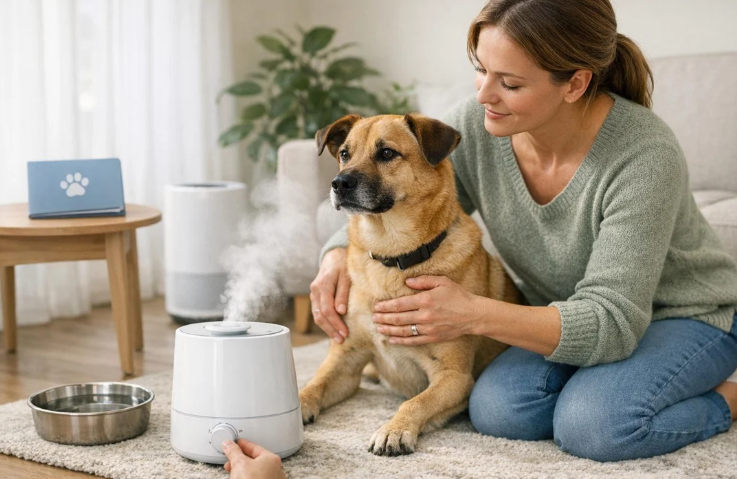
4. Improve filtration and airflow. Replace HVAC filters on schedule and use the right filter for your system. A portable air purifier with a HEPA filter can help in the room where your pet spends the most time. Open windows when outdoor air quality is good, but keep them closed during wildfire smoke or high pollen days.
5. Choose low irritant cleaning habits. Use unscented or pet safer cleaning products and avoid mixing chemicals. Let floors and fabrics dry fully before your pet returns to the area. Strong fumes trapped in a small room can bother a pet long after the surface looks clean.
Daily pet respiratory care often comes down to simple choices
You do not need a perfect house. You need fewer triggers. That is a relief for many people, especially when they are already juggling medications, vet visits, and the cost of testing. A home can look tidy and still hold a lot of airborne irritants. It can also look lived in and be much easier on your pet’s lungs because the biggest triggers have been removed.
This is where reducing airborne irritants for pets becomes practical, not fussy. If your dog starts coughing every time you spray fabric freshener, that is useful information. If your cat breathes better after you switch to unscented litter and wash bedding more often, that matters. You are not guessing as much as it feels like. You are watching patterns.
Common home changes differ in cost, effort, and impact
| Change | Cost | Effort | Likely Benefit for Pets With Respiratory Issues |
|---|---|---|---|
| Stop indoor smoking and vaping | Low | Medium | High, often one of the biggest improvements |
| Switch to unscented cleaners and litter | Low to moderate | Low | Moderate to high, especially for sensitive pets |
| Wash bedding and vacuum with HEPA filter | Low to moderate | Medium | Moderate, helps reduce dust and dander exposure |
| Replace HVAC filters on schedule | Moderate | Low | Moderate, supports cleaner whole home air |
| Add portable HEPA air purifier | Moderate to high | Low | Moderate to high in the pet’s main living area |
| Repair leaks and address mold | Moderate to high | High | High when moisture or mold is part of the problem |
If symptoms continue despite these changes, the cause may not be environmental alone. Infections, heart disease, collapsing trachea, asthma, nasal disease, and breed related airway problems can look similar at home. That is where a general veterinarian can help sort out what is irritating your pet’s lungs and what needs medical treatment.
Three steps you can take today to support cleaner air for your pet
Track the pattern. Write down when coughing, sneezing, wheezing, or eye irritation happens. Include cleaning days, smoke exposure, pollen spikes, new products, and where your pet was resting. This gives your vet a clearer picture and helps you spot triggers faster.
Start with the room your pet uses most. Wash bedding, remove scented products, vacuum soft surfaces, and check for dust around vents. If budget is tight, one cleaner room is still progress. Many families see the most change by improving the bedroom or living room first.
Get veterinary care if breathing looks strained. Open mouth breathing in cats, blue or gray gums, loud wheezing, repeated coughing fits, or a pet that cannot settle comfortably needs prompt attention. pet respiratory irritants are common, but they are not the only reason breathing changes happen.
See also: Business Financing Ottawa: A Practical Guide for Growing Businesses
Cleaner indoor air can make daily life easier for both of you
You are not overreacting by paying attention to a cough, a sneeze, or a change in breathing. Small signs often show up before a bigger flare. When you reduce the irritants in your home, you give your pet a better chance to rest, recover, and breathe with less effort.
If your pet is still showing respiratory symptoms, schedule an exam with a general veterinarian. A careful checkup can help you tell the difference between an irritated airway and a deeper medical issue, and that clarity can save time, money, and a lot of worry.