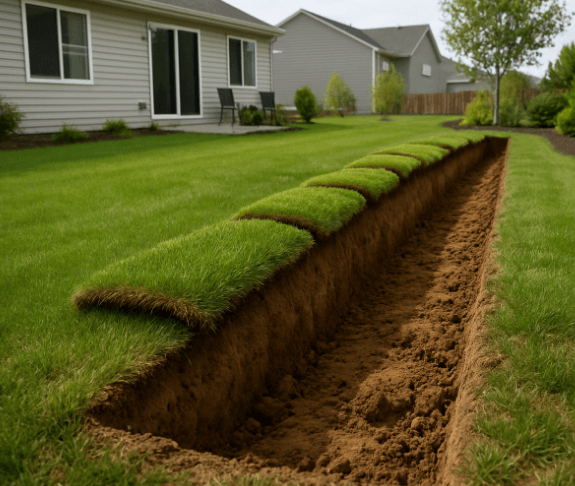
Soil conditions can determine whether trench excavation progresses smoothly or becomes unexpectedly difficult. A property that looks level and uncomplicated on the surface may contain dense clay, loose sand, gravel, large stones, roots, compacted fill, or wet ground underneath. Each condition affects excavation differently and requires careful consideration.
When preparing to dig trenches for underground utilities, drainage infrastructure, conduits, or other installations, understanding the ground is an important first step. Recognizing challenging soil conditions early can improve planning, limit unnecessary disturbance, and make backfilling and restoration easier once the underground work is complete.
Why Soil Conditions Matter in Trenching
Excavation is not simply about removing material from the ground. The characteristics of that material influence how easily it can be excavated, handled, stored, and returned.
Stable soil may allow predictable progress, while difficult ground can change the pace and approach of the project.
Moisture is equally important. Soil that performs well when dry may become heavy, unstable, or difficult to handle after prolonged rainfall.
Examine the Site Before Excavation
Basic site observations can provide useful information before the ground is opened.
Look for areas where water remains after rainfall, exposed stones, mature trees, previously disturbed ground, and visible changes in surface soil. These clues can indicate what may be encountered below.
However, conditions can still change with depth, so excavation plans should allow for unexpected material.
Working With Dense Clay Soil
Clay presents a unique challenge because its characteristics change dramatically with moisture.
When dry, dense clay can become extremely firm. When saturated, it may become sticky and difficult to handle. Excavated clay can also form heavy clumps rather than breaking apart easily.
Workers who dig trenches through clay need to consider both current moisture levels and recent weather.
Avoid Unnecessary Soil Disturbance
Because clay can be difficult to handle, keeping the excavation within the required dimensions becomes especially useful.
An unnecessarily wide trench creates more material to remove and later manage. Accurate measurements can help keep excavation focused on the space actually required for the underground installation.
Excavating Through Sandy or Loose Ground
Loose material behaves differently from compacted soil.
Sand and similar soils may be easier to remove, but the sides of an excavation may not remain as stable. Ground conditions should therefore be assessed continuously rather than assuming easy digging means an uncomplicated project.
Changes in moisture can also alter how loose material behaves.
Watch for Changes Along the Route
A trench route may begin in one soil type and end in another.
For example, workers might encounter compacted fill near a building, natural soil farther away, and gravel near a driveway. Each transition can affect excavation progress.
Regular observation helps workers adapt as conditions change.
Dealing With Rocks and Gravel
Rocky soil can slow excavation considerably. Small stones may be manageable, while larger buried rocks can interfere with the intended trench alignment or depth.
Gravel can also shift as it is disturbed.
Before workers dig trenches across visibly rocky areas, the route should be examined to determine whether an alternative path could reduce unnecessary excavation.
Changing the route is not always possible, but identifying the possibility early improves planning.
Tree Roots Can Complicate the Route
Mature trees and established shrubs can have extensive underground root systems.
Roots may extend well beyond the visible canopy and cross a proposed excavation route unexpectedly. They can slow excavation and create additional decisions about how the trench should proceed.
Planning the route with existing vegetation in mind can help limit unnecessary interference.
Consider Surface Restoration Too
Disturbance around established vegetation does not end when the trench is backfilled.
The surface may need careful restoration so drainage patterns and soil elevations remain appropriate around nearby landscaping. This is another reason to keep excavation controlled from the beginning.
Managing Wet and Saturated Ground
Water is one of the most significant variables in excavation.
Low areas, poor drainage, groundwater, or recent rainfall can introduce moisture into the trench. Wet soil is often heavier to handle, and equipment movement across saturated surfaces may cause additional property disturbance.
Weather conditions should therefore be considered when planning excavation.
Observe Where Water Travels
Before opening the ground, examine how surface water moves across the property.
Existing drainage patterns may influence both the excavation route and final grading. The completed work should not unintentionally create a low area that traps runoff.
Handle Excavated Material Strategically
Challenging soil makes material management particularly important.
Excavated clay, gravel, rocks, roots, and mixed fill should not automatically be treated as identical material. Some soil may be suitable for reuse, while other material may require separation.
Organized material placement also keeps the work area accessible.
Soil piles should not block equipment routes, cover drainage paths, or create unnecessary damage to surrounding landscaping.
Backfill According to Ground Conditions
Once the underground installation is finished, the excavated area must be restored with stability in mind.
Poorly placed backfill can settle, particularly when the excavated material contains large voids or inconsistent soil types. Settlement may become noticeable after rainfall or seasonal changes.
Appropriate placement and compaction can help reduce these problems.
Finish With Careful Grading
The final surface should complement the surrounding property.
Low areas may collect water, while raised areas can redirect runoff. Maintaining a suitable finished elevation helps the restored trench blend into the existing landscape and drainage pattern.
After completion, periodic inspection can identify minor settlement before it develops into a larger surface issue.
See also: Business Financing Ottawa: A Practical Guide for Growing Businesses
Conclusion
Challenging ground conditions do not eliminate the possibility of successful trench excavation, but they make preparation more important. Clay, loose soil, gravel, rocks, roots, and excess moisture each influence how excavation should be approached.
When workers dig trenches with changing soil conditions in mind, they can make better decisions about route selection, dimensions, material handling, backfilling, and restoration. Careful observation throughout the project helps minimize unnecessary disturbance while supporting a stable and practical finished result.