The way business networks have been altered due to the emergence of cloud computing, remote working, mobile computing and distributed systems. The firewall plays an important role in securing business networks, but in today’s world, there is a need for security not just within the boundaries of business networks.
This has led to an increase in demand for newer solutions like Secure Access Service Edge (SASE). This solution combines networking and security functionalities using cloud delivery. By understanding the differences between SASE vs Firewall network security, organizations can learn how these solutions vary and can benefit from them in their security strategies.
What Is a Firewall?
A firewall is a security control that inspects network traffic based on certain rules. A firewall allows traffic to pass while blocking malicious or unauthorized traffic. Firewalls can be implemented in many ways such as hardware-based, software-based, and cloud-based. Firewalls are still valuable tools for managing network traffic in a particular environment.
However, a conventional firewall architecture becomes more complicated as the users, applications, and workloads get distributed among multiple sites and clouds.
See also: Smart Glasses for Men: The Future of Hands-Free Everyday Tech
What Is SASE?
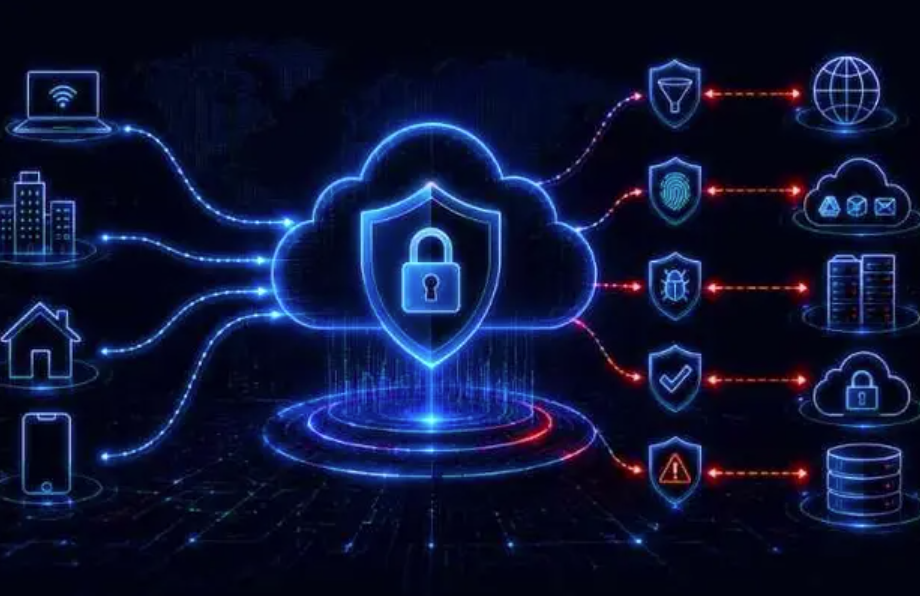
SASE is a cloud-based architecture that integrates networking functionalities with security. As opposed to the previous model where all the data is routed via the central corporate network, SASE offers security features and access closer to the user and required resources.
A SASE architecture will integrate the following functionalities among others:
- Secure web gateways
- Zero Trust Network Access
- Cloud access security controls
- Firewall as a Service
- Software-defined wide area networking
- Security management
This solution is geared toward companies whose users, software, and work environment are distributed.
Key Differences Between SASE & Firewall
Although both SASE and firewalls play a vital role in securing networks for an organization, the two systems operate under different security landscapes. The primary role of a standard firewall is regulating network communications from trusted to untrusted links, while SASE integrates networking and security functions.
| Area | Traditional Firewall | SASE |
| Primary focus | Controls traffic within the network according to security policies. | Integrates networking and several security capabilities in one design. |
| Deployment | Generally used at network borders, in data centers, or at designated locations. | Primarily provided through cloud service providers that are nearer to the user. |
| Remote users | Possible need for use of Virtual Private Networks (VPNs). | Designed to allow secure access by distributed or remote users. |
| Cloud environments | May need other tools for the security of cloud resources. | Distributed resources and cloud-based apps were built for this purpose. |
| Security approach | Mainly dependent on traffic inspection and pre-established network policies. | Combines features like secure access, traffic security, and Zero Trust management. |
| Management | May include management of various appliances at varied locations. | Centralized management and policy enforcement using a cloud-based approach. |
However, the primary distinction lies in where and how the security is implemented. Whereas the firewall mainly concerns itself with securing the boundaries of a network and managing the traffic, the SASE strategy implements security as well as connectivity for all users, applications, and resources irrespective of their location. For companies running in multi-cloud, remote, or hybrid setups, it is a more convenient choice.
When a Firewall May Be the Better Choice
Firewalls still work well for companies that require strong control over their network environment. Firewalls could come in handy where there is a need to safeguard such systems as data centers, corporate networks, branch networks, and defined network segments.
Companies that have already created their infrastructures could favor the use of firewalls since they have their security procedures based on firewalls.
A firewall could still be an important part of any security infrastructure, even when the company employs cloud security solutions.
Some key scenarios are:
- Data Centers: Safeguarding your internal servers and infrastructure.
- Internal Networks: Managing traffic between trusted and untrusted environments.
- Branch Offices: Securing traffic in designated office networks.
- Network Segments: Access restriction between certain systems and resources.
- Existing Infrastructure: Adding security without removing existing firewall protection.
When Businesses Should Consider SASE
The move away from traditional infrastructures to new office-less infrastructures may make it difficult to secure users and applications in a range of locations. SASE can come in handy when organizations require cloud security and connectivity without relying on network-centric systems.
Businesses may consider it when they need to:
- For secure remote and hybrid workers
- Multiple cloud applications support
- Connecting users from various sites
- Security becomes easy to manage
- Applying uniform policies for distributed setups
- Network and security functionality combined
SASE should not be considered by default to substitute all firewalls. Companies need to analyze the infrastructure that they have, their usage of the cloud, employees, and their security goals in order to understand where they can get maximum benefit from SASE. It can work together with other security measures without replacing them.
Can SASE and Firewalls Work Together?
Absolutely. Companies don’t have to stick to only one model. On the one hand, firewalls will be responsible for protecting certain networks and workloads, whereas on the other hand, SASE can offer protection for remote users, cloud applications, and so forth.
Both models could coexist in an organization in order to provide the best solution for its problems.
How to Choose the Right Approach
The choice of whether to go for SASE or firewalls as security measures depends on various aspects such as the company’s infrastructure, staff, applications, and security preferences. The following considerations can help companies in deciding:
| Factor | What Businesses Should Consider |
| User and Application Locations | Identify the location of users, applications, and data and their means of accessing the business resources. |
| On-Premises Infrastructure | Firewall security can still be useful for organizations with extensive systems deployed on-premises. |
| Cloud Adoption | Companies utilizing more than one cloud platform may find the cloud security functions provided by SASE useful. |
| Remote and Hybrid Work | Think about whether the employees use applications and resources from multiple locations and devices. |
| Existing Security Investments | Assess existing firewalls, security applications, and infrastructure prior to implementing new technologies. |
| Management Complexity | Think about the requirements for central management and uniform policies in dispersed environments. |
| Compliance Requirements | Make sure that the selected methodology ensures access control, monitoring, security and any other requirements. |
Finally, business organizations need to consider their particular security needs and objectives and not adopt new technologies based only on them being novel.
Final Thoughts
The approaches used by SASE and firewalls to ensure network security are quite different from each other. Firewalls are still very useful to filter traffic in a well-defined environment, while SASE offers a more holistic approach from the cloud to secure networks. In the case of several organizations, the best approach might be to make use of both SASE and firewall technology wherever it fits best.
Frequently Asked Questions
1. Is SASE a replacement for a firewall?
This is not necessarily true. SASE consists of features such as Firewall as a Service; however, traditional firewalls can also be useful for securing networks, data centers, and workloads.
2. What is the main difference between SASE and a traditional firewall?
The firewall is mainly concerned with filtering and regulating network traffic, but SASE is an amalgamation of networking and security capabilities provided via a cloud architecture.
3. Is SASE suitable for remote work?
Yes. SASE was built in such a way that it offers security and connection for the users accessing applications and resources from various locations.
4. Should businesses use SASE and firewalls together?
They can. This is because both technologies, when used together, give organizations the ability to protect themselves through firewalls in some environments and through the use of SASE in others.