You may have noticed your front teeth look shorter than they used to, or one edge chips again and again, or your smile looks uneven in photos even though nothing seems “wrong.” That kind of change is easy to dismiss at first. Then it starts to bother you when you eat, when you talk, or when you catch your reflection and can’t quite place what changed. In some cases, your dentist may recommend options to straighten your smile with Tidal clear aligners in Buckhead, Atlanta.
Front tooth length is not only about appearance. It also connects to how your upper and lower teeth meet, slide, and carry pressure. When a dentist looks at tooth size without checking bite function, the result can miss the real cause of wear, chipping, or strain. A smile can be made to look longer and brighter, but if the bite is off, the same damage often comes back.
Why front tooth length should be evaluated alongside bite function comes down to one simple truth. Teeth do not work alone. They function as a system, and the front teeth play a major role in guiding jaw movement and protecting the back teeth during motion.
Front Tooth Length and Bite Function Affect Each Other Every Day
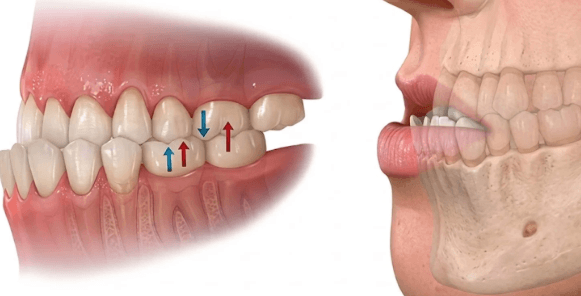
Your front teeth help control how your jaw moves when you speak, chew, and slide your teeth forward or side to side. If those teeth are too short from wear, or too long from poorly planned dental work, the bite can become unstable. That instability may show up as flattened edges, cracks, jaw soreness, headaches, or a feeling that your teeth do not land evenly.
This is where people get stuck. They come in wanting cosmetic improvement because the front teeth look worn, small, or uneven. The visible problem is real, but the hidden problem is often force. If grinding, clenching, or a misdirected bite caused the shortening in the first place, simply adding bonding, veneers, or crowns without checking function can turn into a cycle of repair and breakage.
Research on occlusion and anterior guidance has shown how front teeth influence jaw movement and load distribution. That matters because the bite is not just about whether teeth touch. It is about how they touch, when they touch, and which teeth absorb force during movement. You can read more in this review of anterior guidance and its role in occlusion.
Short Front Teeth Can Signal Wear, Not Just a Cosmetic Issue
Worn front teeth often look like a beauty issue first. They can make your smile seem older, less balanced, or less visible when you talk. Under that surface, the wear may be telling a larger story. Night grinding, acid erosion, bite collapse, missing back teeth, or old restorations that changed the way your teeth meet can all reduce front tooth length.
You might think, “I just want my teeth fixed.” That makes sense. No one wants a long, technical explanation when they are already frustrated. Still, if a dentist skips the reason the teeth became short, your treatment may not last as long as it should.
A modern front tooth length and occlusion evaluation often includes photos, bite analysis, wear pattern review, and a close look at how the front teeth guide movement. Studies on tooth wear also show that worn dentition should be assessed as both a functional and esthetic condition, not one or the other. This clinical review on worn dentition and treatment planning explains that connection clearly.
Cosmetic Dentistry Works Best When Function Leads the Plan
Good cosmetic work respects the bite. If your front teeth need lengthening, the dentist has to decide how much length your face, speech, lip position, and bite can support. Too little length may leave the smile looking unfinished. Too much may create pressure, speech changes, or repeated fractures.
This is why bite function in cosmetic dentistry matters so much. Veneers, bonding, and crowns can look beautiful on day one. They also need to survive coffee cups, sandwiches, stress clenching, and years of normal movement. That only happens when the shape of the new teeth fits the way your jaw actually works.
A general and cosmetic dentist should be thinking about both appearance and mechanics at the same time. You do not need a smile that only looks good in still photos. You need one that holds up on a normal Tuesday when you are eating lunch at your desk and talking through a long day.
Common Treatment Paths and What They Need From the Bite
| Situation | Cosmetic Goal | Functional Concern | What to Evaluate First |
| Front teeth look short and flat | Restore length and youthful shape | Grinding or erosive wear may continue damaging restorations | Wear patterns, jaw habits, front tooth guidance |
| One front tooth keeps chipping | Create a smooth, even edge | Uneven contact may overload one tooth | Bite contact points and jaw movement |
| Veneers or bonding planned for a smile makeover | Improve symmetry, color, and length | Poor bite design can shorten restoration life | Occlusion, speech, lip support, esthetic proportions |
| Back teeth are worn or missing | Improve front smile appearance | Front teeth may be carrying too much force | Overall bite support and force distribution |
Three Steps You Can Take Before Committing to Treatment
Ask for a functional exam, not only a cosmetic consult. If your main concern is short or worn front teeth, ask the dentist to check how your teeth come together, how they move, and whether grinding or clenching is part of the picture. That one step can change the treatment plan for the better.
Track the signs your teeth are under stress. Chipped edges, morning jaw tightness, tension headaches, sensitivity, and teeth that seem to be getting shorter all matter. Bring photos if you have older pictures of your smile. Small changes over time are often easier to spot that way.
Choose treatment that protects the result. If you need bonding, veneers, or crowns, ask what will help them last. You may need a night guard, bite adjustment, or treatment for missing or worn back teeth. Cosmetic work is stronger when it is supported by a stable bite.
See also: Business Financing Ottawa: A Practical Guide for Growing Businesses
A Better Smile Needs a Bite That Supports It
If your front teeth look shorter, uneven, or worn down, you are not overreacting by paying attention to it. Those changes often point to both esthetic and functional problems, and both deserve care. The best outcomes come from treatment that respects how your smile looks and how your teeth work.
If you are considering care from a general and cosmetic dentist, ask for an evaluation that includes front tooth length, wear patterns, and bite function before any final cosmetic plan is made.