Glaucoma needs long-term monitoring because it can damage the optic nerve slowly and silently, often long before you notice any change in your vision. Regular check-ups at an eye care hospital help spot this damage early, because sight lost to glaucoma usually cannot be brought back.
Many people in India stop their follow-up visits once their eyes feel fine. With glaucoma, feeling fine is not always a reliable sign.
Why Glaucoma Often Goes Unnoticed
In its common form, glaucoma rarely causes pain, redness or blurry vision in the early stages.
It usually affects side vision first. The brain is excellent at filling in small gaps, so you may not notice anything until the damage has spread closer to the centre. By then, a large part of the nerve may already be affected.
What Regular Monitoring Tracks
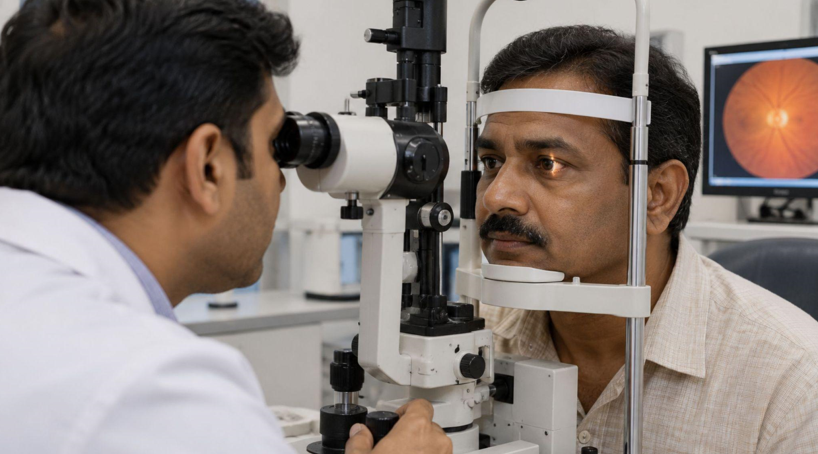
Each visit to an eye care hospital looks at more than your reading power.
Your doctor may check:
- The pressure inside your eyes.
- The health and shape of the optic nerve.
- Your side vision, through a field test.
- The thickness of the nerve fibre layer, using a scan.
- The drainage angle of the eye.
Comparing these results over time shows whether the condition is stable or slowly changing.
Eye Pressure Can Change
Eye pressure is not fixed. It can go up and down through the day and over the years.
A treatment that works well now may need adjusting later. This is why a glaucoma plan is not a one-time decision. Regular reviews at an eye hospital help your doctor fine-tune the drops or suggest other options when needed.
Treatment Needs to Be Consistent
Glaucoma drops control the condition, but they do not cure it. Some people stop using drops because they don’t notice any difference. Others skip doses when they run out or travel. Missing treatment can allow the pressure to rise unexpectedly. Your eye care hospital team can help if the drops cause irritation or are hard to use.
Who Needs Extra Attention?
Some people have a higher chance of developing glaucoma or seeing it progress.
- Those with a family history of glaucoma.
- People with diabetes or high BP.
- Those with high short-sightedness.
- People who use steroid medicines for a long time.
- Anyone who has had an eye injury in the past.
If any of these apply to you, keeping up with visits to your eye hospital becomes even more important.
See also: Health Insurance for Senior Citizens: Best Plans.
Making Follow-Ups Part Of Your Routine
Treating glaucoma care like a regular health check can make it easier to keep up with.
Keep a file of your test reports and prescriptions. Set reminders for your next appointment and for your eye drops. Choosing an eye care hospital close to home or work can also make regular visits more practical.
Conclusion
Glaucoma rarely warns you before it takes something away. Monitoring is how you stay a step ahead of it.
Clear vision today is good news, but it does not tell the whole story. Steady treatment and regular reviews at a trusted eye care hospital give your optic nerve the protection it needs. Long-term care helps you keep your vision and enjoy it for years.