A tutorial is the first conversation a game has with its player, and it often decides whether that player stays. Many games treat tutorials as a checklist: pop up a text box, explain every button, then hand over control. Players skim past the text, forget half of it by the time they need it, and start guessing. Better tutorials don’t explain more, they teach through action. They put the player in a safe space, let them try the core idea, and reveal complexity only when it becomes relevant. Getting that balance right is one of the most valuable things a creator can do, because every player passes through the tutorial, and the ones who get lost there rarely come back.
Why Tutorials Fail
Most tutorial problems come from a simple mistake: designers know their game so well that they forget what it’s like not to know it. Every control feels obvious to the person who built it, so they explain too little or too much. Too little leaves players stuck. Too much buries the important parts under information they don’t need yet.
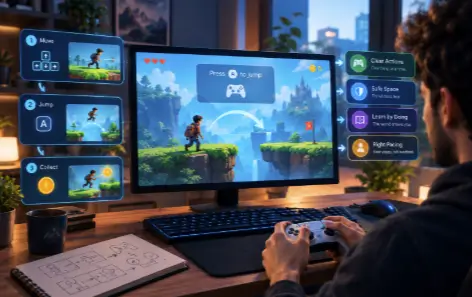
Tutorials also fail when they’re disconnected from play. A paragraph explaining a jump mechanic is far less effective than a short, safe area where the player jumps over a gap, lands, and feels the result. Reading about an action creates understanding in theory, but doing it creates understanding in practice.
Teach Through Doing
Start With a Single Action
The opening of a tutorial should introduce one action, the core verb of the game. A player who learns one thing clearly feels competent. A player who is handed five instructions at once feels overwhelmed. Pick the single action that matters most, build the first few moments around it, and save everything else for later.
Build a Safe Space to Experiment
Players learn best when mistakes don’t hurt. A tutorial area with no enemies, no timers, and no real consequences lets players try things without fear. They can run into walls, jump off ledges, and test what happens, all without being punished. That freedom builds curiosity, and curiosity is what makes players willing to learn.
Make the Lesson Visible in the Environment
Good tutorials show the lesson in the layout itself. A gap that’s clearly too wide to walk across suggests a jump. A ledge with a glowing edge invites a climb. A door that only opens when a switch is pressed teaches interaction without a single word. When the environment does the teaching, players feel like they discovered the answer rather than being told it.
Introduce the Next Step Only After the First One Lands
Each new concept should follow a moment of success with the last one. Once a player has jumped a gap, the next section can ask them to jump while avoiding something. Once they’ve mastered that, the tutorial can add a second mechanic. This pattern builds a chain of small wins, and each win makes the next challenge feel reachable.
Keep Text Short and Timely
Text still has a role, but it works best when it’s brief and appears at the moment it’s needed. A single line that says “Hold to jump higher” is far more useful right before a high ledge than a full page of controls read at the start of the game. Players rarely read long blocks of instruction, and they almost never remember them. Short, contextual prompts get read because they arrive when they matter.
Avoid repeating prompts once a player clearly understands an action. A tutorial that keeps reminding a player of something they’ve already done feels condescending, and it makes the rest of the game feel patronizing too.
Respect Different Levels of Experience
Some players have played hundreds of games and pick up controls instantly. Others have never held a controller. A tutorial that works for one group can frustrate the other. Offering a skip option for experienced players and keeping the tutorial available for newcomers covers both groups. Letting players replay tutorial sections later also helps those who skipped too quickly and now feel stuck.
Pacing matters too. Experienced players grow impatient with slow, deliberate lessons, while newcomers need more time to absorb each step. Watching how quickly different players move through the same tutorial reveals where the pacing is off.
Testing Tutorials With Fresh Players
Watch for the First Moment of Confusion
Hand the game to someone who has never seen it and say nothing. Watch their hands and their face. The first time they hesitate, look at the screen with a puzzled expression, or try an action you didn’t expect, marks the exact point where the tutorial failed to communicate. That single moment is often more useful than a dozen survey answers.
Notice When Players Stop Reading
If players skip text boxes or press buttons to dismiss prompts without reading them, the text is either too long or appears at the wrong time. Shortening it or moving it closer to the relevant action usually fixes the problem.
Check Whether Players Can Explain What They Learned
After the tutorial, ask the player to describe what they just did. Can they name the core action? Do they know what the goal of the first real level is? If they can’t explain it back, the lesson didn’t land, even if they completed every step.
A Practical Example of Tutorial Design
Frozen Harbor shows how a game can introduce its world and mechanics without overwhelming new players. Its opening moments focus on a clear action and let the environment guide the player forward, which makes the early experience feel natural rather than scripted.
How to Create a Game With Better Tutorial Experiences
Creators who want to build tutorials like this can use an AI game maker to test each teaching moment quickly, adjusting placement and timing until new players understand the game on their own.
Common Tutorial Mistakes
The most common mistake is explaining everything at once. Another is locking players into a tutorial with no way to skip it. A third is making the tutorial look nothing like the rest of the game, so players feel they’ve been handed off to a different experience. Each of these problems is easy to spot in playtesting, and each is easy to fix once you see it.
Final Thoughts
A better tutorial teaches through action rather than explanation. Start with one core verb, build a safe space to experiment, let the environment carry the lesson, and introduce each new idea only after the last one succeeds. Keep text short and well-timed, respect players who already know the genre, and test with fresh players who can show you exactly where understanding breaks down. When the tutorial works, players leave it feeling capable rather than instructed, and that feeling carries them through the rest of the game.