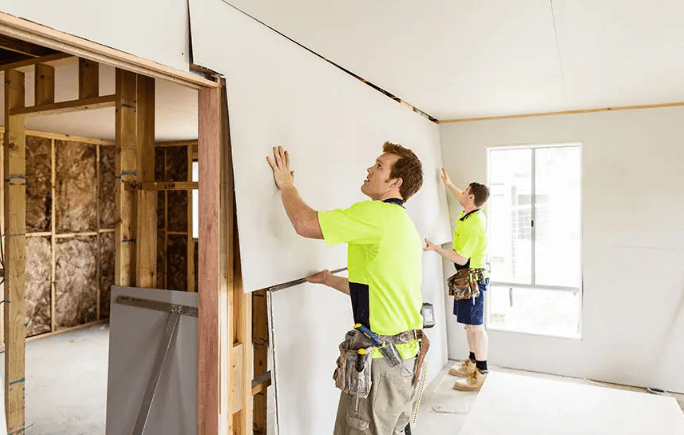
Drywall repairing & damage happens to almost every home, and you can fix most dents, cracks, and small-to-medium holes without hiring a pro. You’ll learn which simple tools and techniques actually work, how to diagnose the type of damage, and when a patch or full replacement makes more sense—so you save time and avoid costly mistakes.
This guide Drywall Repairbreaks down common causes of wall damage and the right repair approach for each, from popped nail heads to water stains. Follow clear, step-by-step guidance on choosing materials, using spackle, tape, and joint compound, and achieving a smooth finish that blends with the surrounding wall.
Common Causes of Wall Damage
You’ll most often see damage from direct hits, water intrusion, or poor workmanship. Each cause affects repair approach and materials, so identifying the source first saves time and prevents repeat damage.
Accidental Impact
Furniture knocks, doorknob strikes, and kids’ play cause the majority of visible surface damage. Small dents and nail pops from framed pictures are common and usually need only patching and sanding. Large holes from moving accidents or falls require a backing (like a wood or metal brace) and a properly sized patch—use a mesh or drywall patch for holes under 6 inches and a cut-and-replace panel for larger breaches.
Fast repairs use setting-type joint compound for deep fills and lightweight spackle for hairline dents. Match the wall texture and repaint after priming to hide repairs. If the impact damaged framing or electrical/plumbing, stop and inspect before finishing.
Moisture Issues
Leaks from pipes, roof failures, or high indoor humidity cause soft, swollen, stained, or delaminated drywall. You’ll see brown stains, crumbling paper, and mold spots; these indicate you must eliminate the moisture source first. Replace any drywall that stays soft when pressed—moisture-compromised gypsum won’t regain strength after drying.
Treat mold-affected areas with an appropriate biocide and remove heavily contaminated sections. Use mold-resistant drywall or greenboard in areas prone to dampness, and install or service ventilation (exhaust fans, dehumidifiers) to prevent recurrence. Always allow the cavity and studs to dry fully before sealing and finishing.
Improper Installation
Poor taping, insufficient screws, and inadequate joint compound cause cracks, loose seams, and nail pops over time. If installers skipped joint tape, used the wrong screw pattern, or failed to countersink fasteners, joints will show hairline cracks and recessed or protruding fasteners. You’ll notice long, linear cracks along seams and unsightly texture failure.
Corrective work includes removing bad tape, re-taping with paper or fiberglass tape, and applying multiple feathered coats of compound with proper drying between layers. Re-seat or replace screws every 12–16 inches on studs and use adhesive plus screws where required. Proper mudding technique and sanding prevent shrinkage lines and reduce future failures.
Essential Tools and Techniques
Identify the right materials, prepare the damaged area thoroughly, and finish with proper taping, compound application, and sanding to restore a smooth, paint-ready surface.
Choosing Repair Materials
Select materials based on hole size and location. For small nail or screw holes use lightweight premixed spackle; it shrinks less and sands easily. For holes up to about 2–3 inches, use a patch kit with a self-adhesive mesh patch and all-purpose joint compound. For larger or irregular holes, cut a backing support (wood or drywall shim) and attach a drywall patch sized to fit; use setting-type compound (hot mud) for fast strength when you need quicker sanding and multiple coats.
Gather these tools: utility knife, drywall saw, drywall screws, 1–2″ drywall tape (paper or fiberglass mesh), 6″ and 12″ taping knives, and a hawk or mud pan. Choose joint compounds by working time: premixed for convenience, setting compounds for speed and durability. Match tape to compound—paper with joint compound, fiberglass mesh with premixed patch compound—unless instructions specify otherwise.
See also: Scaling Your Business with an Expert Salesforce Marketing Cloud Consultant
Surface Preparation
Clear loose material and define a clean, square hole for predictable repairs. Use a utility knife or drywall saw to remove ragged edges and create solid edges to fasten a patch or backing. Remove dust with a brush or vacuum; dust prevents adhesion and causes visible bumps after sanding.
If the damage surrounds a stud, drive screws into the drywall edges to secure backing or patch. Apply a thin coat of compound to fill gaps and embed tape; smooth excess immediately. Let each coat dry fully—setting-type compounds dry faster—before applying the next. Keep workspace ventilated and use a dust mask when cutting or sanding.
Finishing and Sanding
Apply compound in progressively wider coats: ditch coat to fill gaps, second coat to feather edges, and final skim for a smooth surface. Use a 6″ knife for initial filling and a 10–12″ knife to feather the edges thinly beyond the repair area. Feathering prevents visible ridges after paint.
Sand between coats with a fine-grit (120–220) sanding block or pole sander, using light, even pressure. For minimal dust, use a sanding sponge or vacuum-compatible sander. Wipe the surface with a damp cloth to remove residue before priming. Prime patched areas to seal compound and ensure uniform paint finish.