The most common mistake is treating 5 mg as a starting point at all. Mounjaro’s prescribing information sets 2.5 mg once weekly as the opening dosage, held for four weeks, with 5 mg as the second step. The errors that follow from that misreading involve vials, syringes, and compounded solutions whose strengths do not match branded numbers.
The first error is arithmetic, not technique
Mounjaro is approved as an addition to diet and exercise to improve glycemic control in adults and pediatric patients 10 years of age and older with type 2 diabetes. It is not the tirzepatide product approved for weight management. That is Zepbound, which holds separate labeling for weight reduction and long-term weight maintenance in adults with obesity or overweight plus a weight-related condition, and for moderate to severe obstructive sleep apnea in adults with obesity.
Both labels open at 2.5 mg once weekly. The Mounjaro label states plainly that the 2.5 mg dosage is for treatment initiation and is not intended for glycemic control, which is why an early blood sugar reading proves nothing about whether the drug works. Read quickly, that sentence sounds like permission to skip a step. The label reaches the opposite conclusion and directs an increase only after four weeks.
Where vials and syringes go wrong
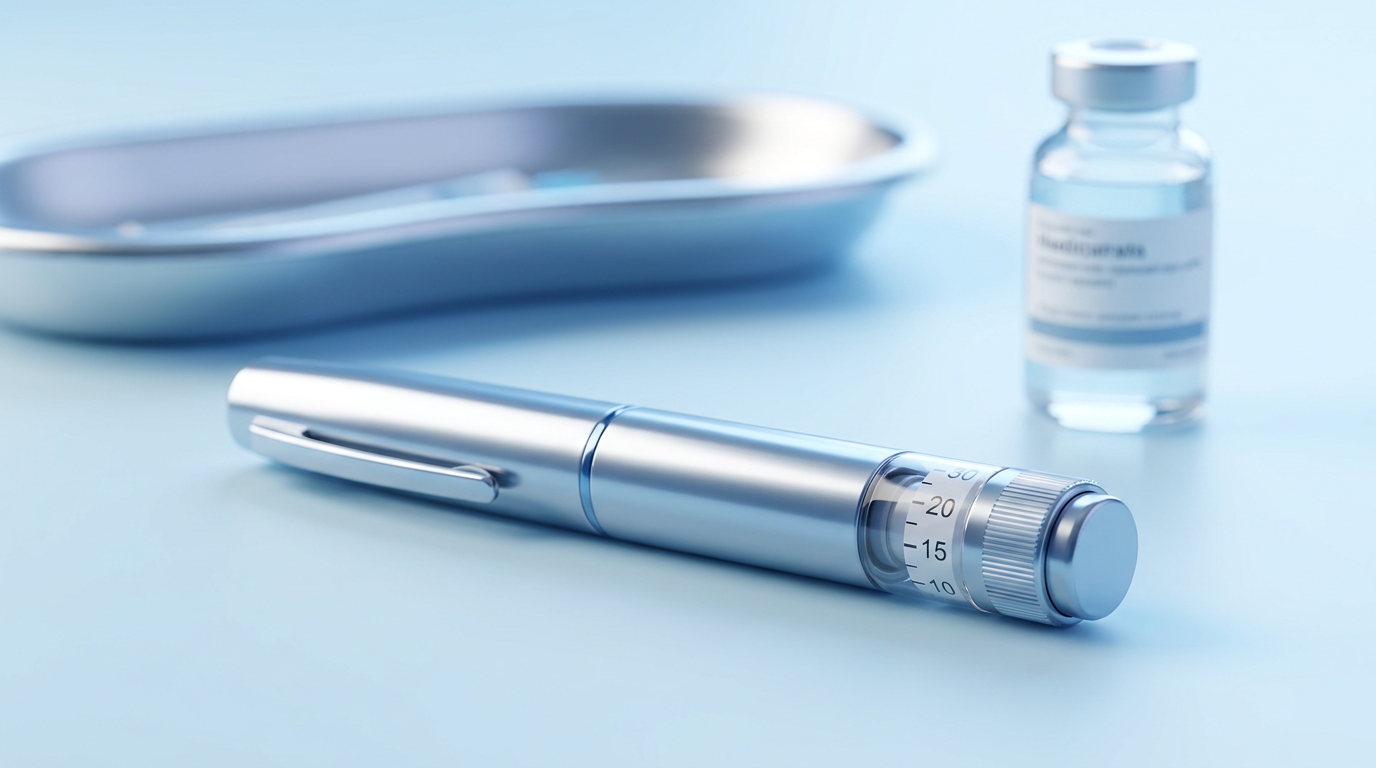
Mounjaro is supplied as single-dose vials, a pre-filled single-dose pen, and a single-patient-use KwikPen. Each is handled differently, and the label instructs prescribers to retrain patients whenever the presentation changes rather than assuming technique carries over. Vial users are told to use a syringe suited to the volume being drawn and a fresh syringe and needle every time.
The recurring failure is reading an insulin syringe as though its markings were milligrams. Insulin syringes are graduated in insulin units, which have no fixed relationship to a milligram of tirzepatide. A published case series of administration errors involving compounded semaglutide reported to a poison control center describes patients drawing far more solution than intended for exactly this reason, and single-center reviews of GLP-1 exposure calls found that measurement mistakes, not deliberate overdose, accounted for most contacts.
Compounded tirzepatide does not inherit the label’s numbers
Compounded tirzepatide is not FDA-approved. No agency-reviewed label fixes its concentration, its container, or its escalation path, and strengths differ between compounding pharmacies. A milligram figure lifted from Mounjaro’s label therefore describes a volume for Mounjaro alone. Carrying that figure across to a compounded vial of unknown strength is the most consequential measurement error in this category, and it is why any compounded plan has to come from the prescriber and the pharmacy that filled the specific vial.
Access route decides how much of this gets checked. A clinic dispensing the branded pen works from one set of instructions. Manufacturer channels such as LillyDirect connect patients to a prescriber and ship the branded product. Telehealth services including Ro, Hims & Hers, LifeMD, and FormBlends work through compounding pharmacies, where the strength printed on the vial is the only number that governs. Asking which pharmacy fills the order, what concentration it supplies, and who answers when the instructions and the vial disagree is reasonable at any of them.
What actually goes wrong in the first month
| The mistake | Why it happens | What follows |
|---|---|---|
| Opening at 5 mg | The first step is assumed to be inactive | Higher rate of nausea, vomiting, and diarrhea early on |
| Reading unit marks as milligrams | An insulin syringe is used with a vial | Large errors in either direction |
| Reusing a syringe or needle | Treated as a way to save money | Poor measurement accuracy and site problems |
| Injecting twice in one week | A missed dose is treated as a debt | Stacked exposure the schedule never intended |
| Switching device without retraining | A new presentation is assumed identical | Wrong volume delivered |
| Sharing a KwikPen | Seen as harmless if the needle is changed | The label prohibits it outright |
| Applying label milligrams to compounded vials | Strengths are assumed to match | Delivered amount bears no fixed relation to intent |
Timing errors are their own category
The injection is weekly, at any time of day, with or without food, which removes most of the scheduling questions people bring over from daily tablets. Two rules remain. A missed dose may be given as soon as possible within four days, or 96 hours; past that window it is skipped and the next injection lands on the usual day. The chosen day can be moved provided at least three days, or 72 hours, separate two injections.
Neither rule permits doubling up, and neither is a route to a higher step sooner. Increases happen in 2.5 mg increments after at least four weeks at the current dose, up to 15 mg weekly in adults and 10 mg weekly in pediatric patients.
Handling, sites, and the items that are not negotiable
Injection is subcutaneous into the abdomen or thigh, or the back of the upper arm when another person administers it, with the site rotated each week. Imaging and histology work in insulin users shows that repeated injection into the same area changes skin thickness, and altered tissue absorbs unpredictably. The KwikPen is never shared between patients, even with a new needle.
Two safety facts sit above technique. Tirzepatide causes thyroid C-cell tumors in rats, human relevance is unresolved, and the drug carries a boxed warning on that basis. It is contraindicated in anyone with a personal or family history of medullary thyroid carcinoma and in anyone with multiple endocrine neoplasia syndrome type 2, and in anyone with known serious hypersensitivity to tirzepatide or its excipients. Correct measurement does not touch either.
Reference pages for the branded product are easy to find, and several telehealth providers keep their own version. HealthRX hosts a dedicated Mounjaro page, as do names like Henry Meds and the manufacturer channel LillyDirect. Reading two or three side by side is a quick way to catch a syringe or concentration claim that does not match the label before it becomes a measurement error.
Frequently asked questions
Is 5 mg ever the first amount someone receives?
Not under the approved label, which places 5 mg after four weeks at 2.5 mg. Whether an individual case departs from that sequence is a prescriber judgment made with the full record in front of them, and it is not something a patient can work out from the carton or the pen.
Can an insulin syringe be used to draw from a tirzepatide vial?
Insulin syringes are marked in insulin units, which do not convert to milligrams of tirzepatide. The label directs vial users to a syringe appropriate for the volume prescribed. Unit-to-milligram confusion is one of the documented routes to a large administration error in reported cases.
Do compounded vials follow the same milligram steps?
No reliable answer exists in general, because concentration varies by pharmacy and no reviewed label sets it. The branded numbers describe the branded product. A compounded preparation needs its own instructions from the prescriber and pharmacy involved, tied to the strength on that particular vial.
What happens if two injections land close together?
The label sets a minimum of three days between doses when the weekly day is being moved. Closer spacing raises exposure over a short window, and gastrointestinal effects are the usual result. It is worth reporting rather than absorbing quietly, since the following weeks may need rearranging.
Does it matter where the injection goes each week?
Yes. Abdomen, thigh, and the back of the upper arm are the labeled sites, and rotation is instructed. Repeated injection into one spot alters the tissue, and tissue that has changed absorbs less predictably, which introduces variability that has nothing to do with the dose written on the prescription.
Sources
- DailyMed, Mounjaro (tirzepatide) prescribing information: https://dailymed.nlm.nih.gov/dailymed/search.cfm?labeltype=all&query=MOUNJARO
- DailyMed, Zepbound (tirzepatide) prescribing information: https://dailymed.nlm.nih.gov/dailymed/search.cfm?labeltype=all&query=ZEPBOUND
- Administration errors of compounded semaglutide reported to a poison control center, case series. PubMed: https://pubmed.ncbi.nlm.nih.gov/37392810/
- Characterization of GLP-1 agonist exposures reported to a single United States poison center. PubMed: https://pubmed.ncbi.nlm.nih.gov/39803696/
- GLP-1 receptor agonist exposures are increasingly common and generally associated with mild symptoms. PubMed: https://pubmed.ncbi.nlm.nih.gov/38861153/
- Repeated insulin injection without site rotation affects skin thickness. PubMed: https://pubmed.ncbi.nlm.nih.gov/35060349/
- Navigating compounded semaglutide: what health care providers need to know. PubMed: https://pubmed.ncbi.nlm.nih.gov/40966636/
- FDA, Compounding and the FDA: Questions and Answers: https://www.fda.gov/drugs/human-drug-compounding/compounding-and-fda-questions-and-answers