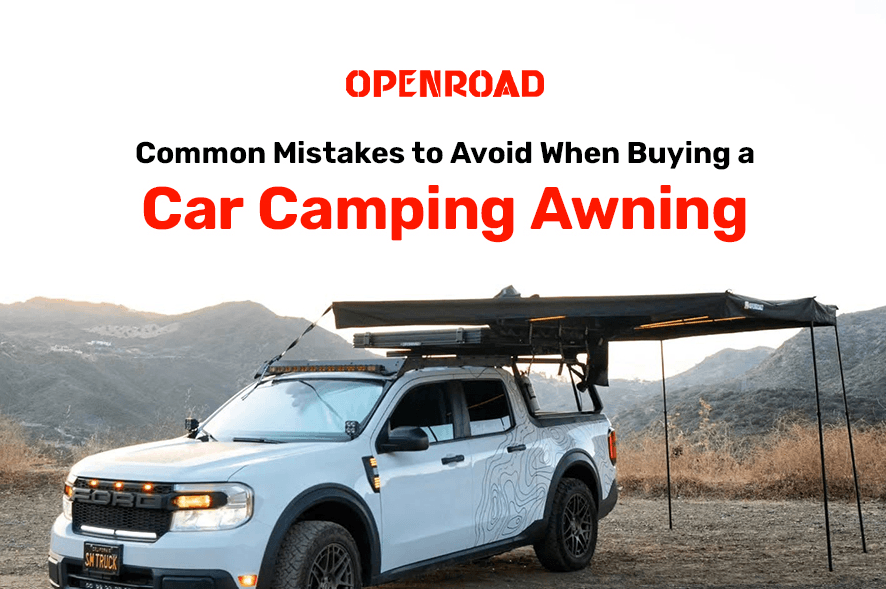
Adding a shelter to your setup changes your outdoor experience. Instant overhead cover makes your campground feel like a pleasant living room, whether cooking a meal amid a sudden downpour or escaping the midafternoon heat.
With so many types, sizes, and mounting configurations, choosing the wrong one is easier than you think. Avoid these frequent pitfalls to ensure you select the best roof rack awning for your vehicle and adventure style.
1. Choosing the Wrong Size for Your Vehicle Rig
One of the most common mistakes campers make when choosing a car camping awning is not matching its size to their vehicle and clearance needs.
A normal straight awning may seem sufficient, but full-size trucks, 4×4 SUVs, and extended families often need more space than a 6.5-foot side awning. An enlarged 270-degree type like the OPENROAD 270 Plus provides wraparound coverage from the side doors to the tailgate for larger rigs or families. This allows rainproof access to the back kitchen or storage drawers.
However, putting a large heavy-duty awning on a small crossbar configuration without weight ratings might cause sagging bars and wind drag. Before committing, measure your roof rack length and static and dynamic weight restrictions.
2. Underestimating Wind and Bad Weather Protection
Sunny afternoons can become windy or stormy evenings in minutes. Assuming all camping awnings manage extreme weather is a big mistake.
Traditional lightweight pull-out installations use vertical support poles and guy lines. In high-wind areas like beaches, desert flats, and mountain ridges, a weak frame might twist or buckle. Look for thick ripstop canvas, reinforced hinges, and heavy-duty aluminum arms. When the wind picks up, a sturdy off-roadawning for camping gives you peace of mind, but you should still stake down your guy ropes when leaving the campground unattended.
3. Forgetting Modular Add-Ons Like Sidewalls
When buying an awning for car camping, consumers generally only consider the roof footprint and ignore side weather protection.
When the sun is directly above, overhead shade is fantastic, but low-angle morning sun, sideways rain, or nighttime breezes can wreck your outdoor setup. Integrating zip-on sidewall kits into an overhead shelter creates an enclosed chamber. Sidewalls provide:
- Full privacy for changing or sleeping.
- A camp stove windbreak.
- Extra shelter during heavy rain.
Planning for modular attachments upfront prevents you from having to replace your setup for full perimeter security.
Ignoring Mounting Compatibility and Roof Clearance
Your ideal configuration looks fantastic, but will it fit your vehicle? Mounting hardware neglect wrecks many weekend getaways before they begin.
Not all roof racks, crossbars, and bed racks have the same T-slot dimensions or weight capacities. If you have a rooftop tent, high-top canopy, or rear-hatch tailgate that swings up, be sure the mounting brackets keep the awning far enough out to minimize interference. Check bracket height and spacing against your rack setup before buying.
See also: Why Hiring an Orlando Construction Lawyer Is Essential for Construction Projects
Pitching the Perfect Campsite Setup
Staying away from these four blunders will provide years of enjoyable trailside shelter. By matching your shelter’s size to your vehicle, prioritizing weather resistance, and leaving room for modular sidewalls, you can turn any parking area into a pleasant, weatherproof basecamp.