Australia’s digital economy is evolving rapidly. Businesses are embracing cloud computing, artificial intelligence, automation, and data-driven decision-making to improve efficiency and gain a competitive advantage. However, this transformation also introduces new risks related to data security, privacy, compliance, and responsible AI usage.
While many organizations focus heavily on cybersecurity, a growing number are realizing that protecting information is only one part of the equation. As AI systems become integrated into everyday business operations, organizations must also establish governance frameworks that ensure AI is deployed responsibly, transparently, and ethically.
This is where internationally recognized standards can play a crucial role.
The Rising Importance of Information Security
Cyberattacks continue to increase across Australia, affecting businesses of all sizes. Data breaches can result in financial losses, regulatory penalties, reputational damage, and loss of customer trust.
To address these challenges, organizations are increasingly adopting structured information security management systems (ISMS). One of the most widely recognized frameworks is ISO 27001.
Professionals pursuing a PECB ISO 27001 Certification in Australia gain the knowledge and expertise needed to implement, manage, and continually improve information security management systems. This certification helps organizations strengthen their security posture while demonstrating commitment to protecting sensitive information.
For Australian businesses operating in sectors such as finance, healthcare, education, government, and technology, ISO 27001 has become a valuable benchmark for security excellence.
AI Is Creating a New Governance Challenge
Artificial intelligence is no longer limited to large enterprises. Australian companies are using AI-powered tools for customer service, content creation, data analysis, fraud detection, recruitment, and operational automation.
However, AI introduces unique risks that traditional cybersecurity frameworks do not fully address.
Some common concerns include:
- Bias in AI-generated decisions
- Lack of transparency in automated systems
- Privacy and data protection challenges
- Regulatory compliance issues
- Accountability for AI-driven outcomes
As governments and regulators worldwide increase their focus on responsible AI practices, businesses need governance structures that ensure AI technologies are used safely and ethically.
Understanding ISO 42001
ISO 42001 is the world’s first international standard specifically designed for Artificial Intelligence Management Systems (AIMS).
The framework helps organizations establish processes for governing AI systems throughout their lifecycle. It provides guidance for managing risks, ensuring transparency, maintaining accountability, and promoting responsible AI practices.
Professionals who earn a PECB ISO 42001 Certification develop expertise in implementing AI governance frameworks that align with international best practices. As AI adoption accelerates across Australia, this certification is becoming increasingly valuable for compliance officers, risk managers, IT leaders, and business executives.
Why Businesses Need Both Standards
Many organizations mistakenly view cybersecurity and AI governance as separate initiatives. In reality, they are highly interconnected.
Information security protects the data that AI systems rely on, while AI governance ensures those systems operate responsibly and ethically.
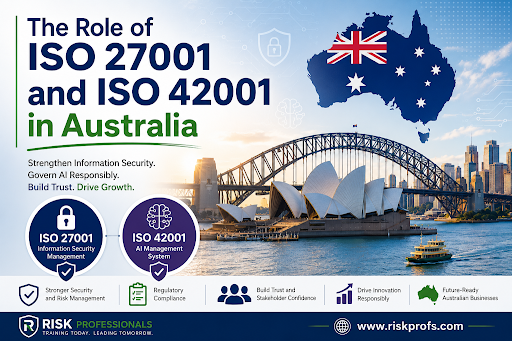
Together, ISO 27001 and ISO 42001 provide a comprehensive framework for managing modern digital risks.
Organizations that implement both standards can benefit from:
- Stronger risk management capabilities
- Improved regulatory readiness
- Increased customer trust
- Better protection of sensitive information
- Responsible AI deployment practices
- Enhanced operational resilience
- Greater competitive advantage
For Australian businesses seeking long-term digital success, combining cybersecurity and AI governance creates a more sustainable foundation for growth.
The Competitive Advantage of Early Adoption
Regulatory expectations around data protection and AI accountability are expected to become more stringent over the coming years. Businesses that proactively establish governance frameworks today will be better prepared for future compliance requirements.
Early adopters can also differentiate themselves in the marketplace by demonstrating commitment to security, transparency, and responsible innovation.
Customers, investors, and business partners increasingly want assurance that organizations are managing both information security and AI-related risks effectively.
Read Also: Best Business Class Airlines to India for Luxury Travel
How Risk Professionals Can Help Organizations Achieve ISO 27001 and ISO 42001 Certification
For Australian businesses looking to strengthen their cybersecurity posture and establish responsible AI governance practices, choosing the right training partner can make a significant difference in the certification journey.
Risk Professionals supports organizations and individuals seeking internationally recognized credentials through professional training programs, expert guidance, and certification preparation resources. Whether a business is beginning its information security journey or building a formal AI governance framework, the company provides learning pathways that align with global standards.
Building Future-Ready Organizations
The future of business will be shaped by both cybersecurity and artificial intelligence. Organizations that focus on only one area may leave significant gaps in their risk management strategy.
By investing in recognized frameworks and professional development opportunities such as PECB ISO 27001 Certification and PECB ISO 42001 Certification, businesses can build stronger governance structures, enhance stakeholder confidence, and prepare for the next generation of digital challenges.
As Australia continues its digital transformation journey, companies that embrace both information security and responsible AI governance will be best positioned to thrive in an increasingly complex business environment.
Conclusion
Digital success in 2026 requires more than protecting data. It also requires ensuring that AI technologies are trustworthy, transparent, and aligned with organizational goals.
Australian businesses that combine strong cybersecurity practices with robust AI governance frameworks can reduce risk, improve compliance, and strengthen their competitive position. ISO 27001 and ISO 42001 provide the roadmap for achieving these objectives, making them essential considerations for organizations preparing for the future.