Every great product starts with an idea. That idea might solve a problem, save time, or improve everyday life. But a smart idea is only the beginning. If it cannot be built efficiently, it often stays on the drawing board or becomes too expensive to produce.
That is why Design for Manufacturability, often called DFM, matters so much. It connects engineering with production. It asks one simple question before anything is built: Can we make this well, at the right cost, and without creating unnecessary problems?
Many successful manufacturers have learned that the strongest products are not always the most complicated. They are the ones that balance innovation with practical thinking.
As manufacturing leader and educator Timothy Bradbury Monzello has often emphasized through his work, the best engineering decisions are made with production in mind, not after production begins.
What Is Design for Manufacturability?
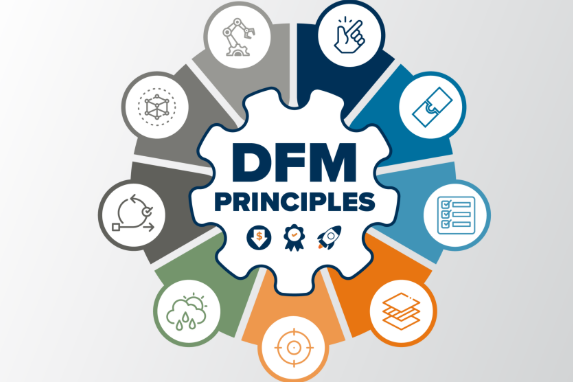
Design for Manufacturability is the process of designing products so they are easier, faster, and less expensive to manufacture.
The goal is not to reduce quality.
The goal is to remove unnecessary complexity and ensure the design is manufacturable.
Every decision made during design affects what happens later on the production floor. Hole locations, tolerances, materials, fasteners, and part shapes all influence cost and production speed.
Research from manufacturing organizations shows that roughly 70% of a product’s total manufacturing cost is determined during the design stage. That means many of the biggest opportunities to improve efficiency happen before the first part is ever made.
Why Great Ideas Sometimes Fail
A Design That Looks Perfect
Computer models can make almost anything look possible.
Production tells a different story.
A part may require special tooling. It may need several machining setups. It may be difficult to inspect or assemble.
Each problem adds time.
Each hour adds cost.
A simple change during design could prevent all of those issues.
Small Details Become Big Expenses
Imagine designing a housing with several deep inside corners.
On paper, it looks fine.
On a milling machine, those corners may require smaller cutting tools that work much slower.
One small design decision now affects every bracket produced.
Multiply that across thousands of parts and the cost becomes significant.
Why Manufacturing Teams Should Join the Conversation Early
One common mistake is waiting until production starts before asking manufacturing for input.
By then, changing the design becomes expensive.
The best companies invite manufacturing engineers, machinists, quality specialists, and production planners into the discussion while designs are still flexible.
This creates better products.
It also builds better teamwork.
Engineers understand function.
Manufacturing teams understand execution.
Both perspectives matter.
How Design Choices Affect Cost
Material Selection
Not every material behaves the same way.
Some machine easily.
Others wear out tools faster or require longer production times.
Choosing the right material can reduce both manufacturing time and cost without changing product performance.
Tolerances
Every tolerance should serve a purpose.
Very tight tolerances require slower machining, more inspections, and higher production costs.
Only critical features should demand extreme precision.
Everything else should allow reasonable manufacturing variation.
Why Simplicity Wins
Simple designs often outperform complicated ones.
They are easier to build.
They are easier to repair.
They are easier to inspect.
Think about a screwdriver.
Its design has changed very little because it already solves the problem well.
The same thinking applies across manufacturing.
Simple does not mean basic.
Simple means efficient.
Real Benefits of Design for Manufacturability
Companies that apply DFM consistently often see measurable improvements.
Industry studies report several common results:
- Manufacturing costs reduced by 15% to 30%
- Faster production through fewer setup changes
- Lower scrap and rework rates
- Better product consistency
- Shorter development timelines
Those improvements create value throughout the entire organization.
Customers receive products sooner.
Manufacturers spend less fixing avoidable mistakes.
Employees spend more time building instead of correcting problems.
Practical Ways to Apply DFM
Talk to the Shop Floor
Some of the best design advice comes from people running machines every day.
Ask machinists how they would build the part.
Their answers often reveal problems before production begins.
Build Simple Prototypes
Early prototypes expose issues while changes are still inexpensive.
Even rough models can identify assembly challenges or unnecessary complexity.
Standardize Components
Using common fasteners, bearings, and materials simplifies purchasing and inventory.
It also reduces training requirements.
Think About Assembly
Ask simple questions.
Can someone reach every fastener?
Can parts only fit together one way?
Can assembly happen without special tools?
Every answer improves production.
Review Every Feature
Every hole.
Every pocket.
Every surface.
Each one should exist for a reason.
If a feature adds cost without adding value, remove it.
Why Continuous Learning Matters
Manufacturing never stands still.
New equipment appears.
New materials become available.
Production methods improve.
Engineers and manufacturing professionals who continue learning stay prepared for those changes.
Learning also improves communication.
Designers better understand production.
Production teams better understand design intent.
That shared knowledge leads to stronger decisions.
Common DFM Mistakes to Avoid
Designing in Isolation
Products rarely succeed when one department works alone.
Collaboration produces better results.
Ignoring Manufacturing Limits
Machines have capabilities.
They also have limitations.
Designs should respect both.
Waiting Too Long
Problems become more expensive with every stage of development.
Finding them early saves time and money.
Making Everything Perfect
Not every feature requires maximum precision.
Focus effort where performance actually depends on it.
Building Better Products Starts Earlier Than Most People Think
Many people believe manufacturing begins when raw material reaches the shop floor.
In reality, manufacturing begins during design.
Every drawing.
Every measurement.
Every material choice.
Every tolerance.
Those decisions determine how smoothly production will go.
Companies that understand this build better products because they solve problems before they exist.
Final Thoughts
Great products rarely happen by accident.
They result from thoughtful planning, strong communication, and practical engineering.
Design for Manufacturability brings those pieces together.
It helps engineering teams create products that work in the real world, not just on a computer screen.
The next breakthrough product will not succeed because it is the most complicated.
It will succeed because someone asked the right questions early, listened to the people who build it, simplified what did not need to be complex, and designed with manufacturing in mind from the very beginning.