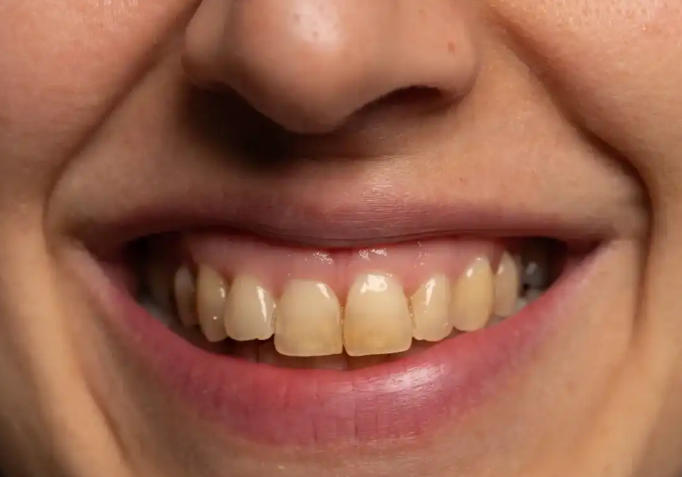
You catch your smile in the mirror and one tooth looks darker than the one next to it, or the front teeth seem clean while the back teeth hold onto a yellow or brown cast. That kind of uneven staining is hard to ignore, and a Westwood dentist can help you understand what may be causing it. It can feel embarrassing, and it often leaves you wondering if you are missing something in your routine.
Sometimes the answer is simple. Uneven tooth discoloration can happen when certain areas of your mouth are not being cleaned as well as others. Plaque tends to cling to the same spots over and over, especially near the gumline, around crowded teeth, and on the side you use less when brushing. Stains from coffee, tea, tobacco, and dark foods settle more easily where plaque and tartar build up. In other cases, the color change points to something deeper, such as enamel wear, past injury, or decay. A general dentist helps sort out the difference.
Uneven staining often follows the places you miss
Teeth do not usually stain in a perfectly even way because people do not brush in a perfectly even way. Most people spend more time on the front teeth than the back teeth. If you are right handed, you may clean one side of your mouth better than the other. If you rush at night, the inside surfaces of the lower front teeth and the outer surfaces of the upper molars often get less attention.
That matters because plaque is sticky and grabs onto pigments. Once plaque hardens into tartar, the stained areas can look darker and rougher. The National Institute of Dental and Craniofacial Research explains that daily brushing and flossing are the foundation of oral care, especially for removing the film that leads to buildup. You can review basic guidance on oral hygiene if your routine has slipped or never felt consistent.
There is also the issue of access. Crooked teeth, old fillings, bonded areas, crowns, and receding gums create edges and pockets where stain collects. You may be cleaning regularly and still notice one tooth looks off because the surface is different or harder to reach. That does not mean you are careless. It usually means the tooth needs more targeted care or a professional cleaning.
Staining can also signal a problem beyond surface cleaning
Not every dark spot is a harmless stain. A tooth that changes color on its own, especially if it turns gray, brown, or dull compared with nearby teeth, can point to trauma, nerve damage, or decay. MedlinePlus notes that tooth discoloration can come from external stains, internal changes, certain medicines, and damage to the tooth structure.
This is where people get stuck. You may assume whitening toothpaste will fix it, scrub harder, and still see no change. If the color is coming from inside the tooth, stronger brushing will not solve it and may wear down enamel. If the darker area is actually a cavity, waiting gives it more time to spread. MedlinePlus also explains that tooth decay often starts quietly, long before it causes major pain.
That is why patchy tooth staining deserves a closer look when it does not lift with normal brushing or when it shows up in one tooth more than the rest. The pattern matters. Generalized yellowing often suggests surface stain or age related enamel changes. One isolated dark tooth raises different concerns.
Daily habits shape where stains build up
Real life has a way of showing up on teeth. Coffee on the commute, tea through the afternoon, red sauce at dinner, smoking, mouth breathing at night, grinding, dry mouth from medication, all of it can affect how your smile looks. If saliva is low, stains and plaque stick more easily. If you snack often, acids and sugars feed the cycle of buildup. If you skip flossing, the spaces between teeth can look darker even when the front surfaces seem bright.
You might also notice this after braces come off, after a dental injury, or around an older filling. In those cases, the issue may be less about brushing effort and more about surface texture, enamel loss, or the way light hits the tooth. A general dentist can tell whether the fix is a cleaning, polishing, whitening, filling replacement, or treatment for a damaged tooth.
Home cleaning and professional dental care do different jobs
| Concern | Home Care | Professional Dental Care |
|---|---|---|
| Surface stain from food or drinks | Can reduce new buildup with brushing, flossing, and stain limiting habits | Can remove hardened stain and polish areas you cannot fully reach at home |
| Tartar holding dark color near the gums | Cannot remove tartar once it hardens | Cleaning tools remove tartar safely |
| One tooth turning gray or brown | Whitening toothpaste often does little | Exam and X rays can check for trauma, decay, or nerve changes |
| Dark spaces between teeth | Flossing helps prevent more buildup | Cleaning and exam can tell whether the cause is plaque, gum recession, or decay |
| Whitening uneven results | Overuse may irritate teeth and gums | A dentist can tell if whitening fits your teeth or if another treatment makes more sense |
Small changes in technique can make a visible difference
Step 1: Slow down and map your brushing.
Spend two full minutes brushing and divide your mouth into sections so no area gets skipped. Angle the bristles toward the gumline. Focus on the back teeth, the inside surfaces, and the side you usually neglect. If one area stains more, give it a few extra seconds instead of brushing harder.
Step 2: Clean between the teeth every day.
Floss or use interdental cleaners where your brush cannot reach. This is one of the most common reasons teeth look uneven in color. The front may seem clean while the spaces between teeth stay dark. Consistent cleaning there often improves the look of your smile and lowers the risk of decay at the same time.
Step 3: Get a dental exam if one tooth stands out.
If a single tooth is darker, if a spot feels rough, or if the stain does not improve with better home care, book a visit with a general dentist. Tooth staining differences are sometimes just stain, and sometimes they are the first visible sign of a deeper problem. Getting clarity early is usually simpler and less costly than waiting.
See also: Business Financing Ottawa: A Practical Guide for Growing Businesses
A closer look now can save trouble later
Uneven staining is not always about vanity. It often reflects how and where buildup forms, and it can also reveal decay, injury, or enamel changes that need attention. If your teeth do not seem to stain evenly, trust that observation. Your mouth is giving you useful information.
With the right cleaning habits and support from a general dentist, many staining issues can be improved, and the ones that need treatment can be caught before they grow into bigger problems.