Summary
In this article, we look at how rotary actuators deliver controlled rotational motion across manufacturing, robotics, medical devices, and everyday industrial systems. From large assembly lines to micro-scale optical work, these components solve real engineering problems where precise, repeatable turning matters.
Readers will learn where compact and specialized designs fit best, how two-position rotation supports valves and sorting tasks, and how experienced manufacturers help engineers choose the right solution. The article closes with key takeaways, common questions, and practical guidance for real-world use.
Introduction
Rotary actuators are among the quiet workhorses of modern automation. They convert energy, usually pneumatic, hydraulic, or electric, into controlled rotational motion, and that simple function ends up solving an enormous range of engineering problems. Whether it’s turning a valve, flipping a part on a conveyor, or rotating a gripper into position, these devices show up in places most people never notice.
This blog looks at common applications of rotary actuators across industries, from heavy manufacturing floors to delicate micro-assembly work. Understanding where and why these components get used helps engineers, buyers, and curious readers appreciate the thinking behind everyday automation. Let’s break down where rotational motion actually earns its keep in real production environments.
What Rotary Actuators Do and Why Industries Depend on Them
At their core, rotary actuators convert linear or fluid energy into rotational output, usually through a limited arc rather than continuous spin. This controlled, repeatable motion makes them useful wherever a machine needs to turn or reposition a part accurately.
Converting Energy Into Controlled Motion
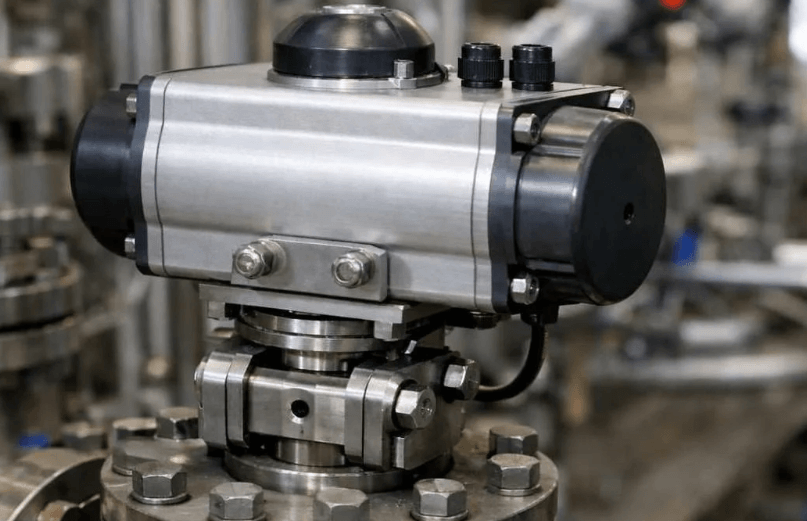
Pneumatic, hydraulic, and electric variants all achieve the same goal differently. Compressed air or fluid pressure moves internal vanes or pistons, translating force into a rotating shaft output.
Why Precision Matters in Automated Systems
Modern production lines demand repeatable positioning down to fractions of a degree. Poor rotational accuracy causes misalignment, part damage, or slower cycle times across stations.
Common Design Types Used in Industry
Vane-style, rack-and-pinion, and scotch-yoke designs each offer different torque, speed, and space trade-offs, letting engineers match the design to available mounting room.
Matching Actuators to the Right Task
Choosing between designs often depends on load, environment, and how much rotation the task actually requires, rather than picking the most powerful option available.
Manufacturing and Assembly Line Applications That Depend on Rotational Movement
Factory floors rely heavily on rotation to keep production moving smoothly. From transferring parts to changing tools, these components quietly handle repetitive tasks that would otherwise slow operators down or introduce errors.
Component Transfer and Positioning
On assembly lines, actuators turn fixtures or trays so parts arrive in the correct orientation for the next station, reducing manual handling and delays.
Packaging and Palletizing Systems
Food, pharmaceutical, and consumer goods lines use rotational movement to turn products for labeling, sealing, or stacking without damaging delicate items during transfer.
Tool Changing in CNC Machines
Machine tools use rotary motion to swap cutting tools automatically, cutting downtime between operations and keeping unattended manufacturing runs efficient overnight.
Sorting and Diverting Mechanisms
Conveyor sorting gates often rotate to redirect items into different lanes, a task well suited to a semi rotary actuator that moves reliably between two fixed positions.
Robotics and Automated Handling Systems Powered by Rotational Motion
Robotic systems depend on rotation at nearly every joint. Robotics actuators allow arms, wrists, and grippers to reach awkward angles, making them essential wherever flexible, repeatable movement is required.
Robotic Arm Joint Movement
Multi-axis robotic arms use rotational components at the shoulder, elbow, and wrist joints, giving them the reach and flexibility needed for welding, painting, or assembly tasks.
Pick and Place Operations in Electronics
Small electronic components need gentle, accurate placement. Compact actuators turn grippers into position without excessive force that could damage delicate circuit boards.
End-Effector Rotation in Collaborative Robots
Collaborative robots working alongside humans use controlled rotation to orient tools or parts safely, often within tight workspaces shared with operators.
Automated Inspection and Vision Systems
Cameras mounted on rotating stages turn parts through set angles, allowing automated vision systems to capture multiple views for defect detection.
Precision Applications in Medical, Micro, and Small-Scale Industries
Some industries demand rotation on an entirely different scale. Medical device manufacturing, optics, and electronics assembly often call for a micro rotary actuator or small rotary actuator, where space is measured in millimeters.
Medical Device and Implant Manufacturing
Surgical instrument assembly and implant finishing require extremely fine rotational control, since even minor misalignment can affect the fit or function of the finished device.
Optical Component Assembly
Lenses and micro-optical parts, sometimes thinner than a human hair, need gentle, precise rotation during alignment and bonding to avoid damaging fragile surfaces.
Laboratory Automation Equipment
Lab instruments use compact actuators to rotate sample trays or mixing components, supporting consistent results across repetitive diagnostic processes.
Miniature Electronics Assembly
Compact consumer electronics benefit from actuators small enough to fit inside tight housings while still delivering dependable rotational accuracy.
Everyday Industrial Uses Across Valve Control, Sorting, and Aerospace Testing
Beyond specialized fields, these components handle everyday industrial functions that keep systems running safely. Many rely on a 180 degree rotary actuator to move parts between two clear end positions.
Valve Control in Process Industries
Oil, gas, and water treatment plants use rotational motion to open and close valves, often needing precise, repeatable half-turn movement for flow control.
Flipping and Sorting Parts on Production Lines
Manufacturing lines frequently flip components a half-turn to present the opposite side for inspection, printing, or the next assembly step.
Aerospace Component Testing and Positioning
Aerospace testing rigs rotate components through fixed angles to simulate operating conditions, checking durability before parts are approved for use.
HVAC and Building Automation Systems
Dampers and louvers in ventilation systems use rotational motion to regulate airflow automatically based on temperature or air quality readings.
How Experienced Manufacturers Like SCHUNK Support These Applications
Selecting and integrating the right actuator often requires deep engineering expertise, not just off-the-shelf parts. Companies with decades of automation experience help bridge that gap for demanding, real-world applications.
Engineering Know-How Across Toolholding and Gripping
SCHUNK brings specialist know-how in toolholding, workholding, gripping technology, and automation, drawing on experience with challenges ranging from micro-optics processing to delicate food handling.
Complete Solutions for Complex Automation Needs
Rather than supplying isolated parts, SCHUNK provides intelligent complete solutions for robot systems and production processes, covering everything from individual components to full automation setups.
Solving Real-World Precision Challenges
From milling implant surfaces that mimic natural joints to moving fragile baked goods without breakage, this kind of work reflects the same precision challenges rotational components are built to solve.
Key Takeaways
● Rotary actuators convert energy into controlled, repeatable rotation.
● Manufacturing lines use them for transfer, packaging, and tool changing.
● Robotics actuators enable flexible joint movement in robotic arms.
● Medical and optical work often needs a micro rotary actuator.
● Compact electronics benefit from a small rotary actuator design.
● A 180 degree rotary actuator suits valve control and sorting tasks.
● A semi rotary actuator works well for two-position movement.
● Choosing the right type depends on space, torque, and precision needs.
Conclusion
Rotary actuators may not be visible in everyday life, but they quietly support countless processes across manufacturing, robotics, medical devices, and building systems. From large industrial valves to micro-scale optical assembly, their ability to deliver controlled, repeatable rotation makes automation safer, faster, and more consistent.
Whether an application calls for a compact micro design, a dependable half-turn mechanism, or flexible joint movement for a robotic arm, choosing the right type comes down to understanding torque, space, and precision requirements. As automation continues expanding into smaller and more specialized applications, these components will remain essential building blocks. Understanding their real-world uses helps engineers and buyers make smarter, better-informed decisions for their own systems.
See also: Business Development Strategies That Work
Frequently Asked Questions
1. What is the main difference between a rotary actuator and a rotary motor?
A rotary actuator typically moves through a limited arc, such as 90 or 180 degrees, then stops, while a motor usually rotates continuously. Actuators are chosen when a system needs precise, repeatable positioning rather than constant spinning, making them ideal for valves, gates, and robotic joints.
2. Where are micro rotary actuators typically used?
A micro rotary actuator is common in optical assembly, medical devices, and miniature electronics, where space is extremely limited. These compact units still deliver accurate rotational control, supporting tasks like lens alignment or small-scale component positioning without requiring bulky equipment.
3. How does a 180 degree rotary actuator differ from other actuator types?
A 180 degree rotary actuator moves a part between two fixed end positions exactly half a turn apart. This makes it suited to flipping, sorting, or valve applications where only two stable positions are needed, rather than continuous or variable rotation.
4. Are small rotary actuators reliable for industrial use?
Yes, a small rotary actuator is built to the same durability standards as larger units, just scaled down. They are commonly used in laboratory automation, electronics assembly, and compact machinery where space constraints don’t allow for larger components.
5. What industries use robotics actuators the most?
Robotics actuators are widely used in automotive manufacturing, electronics assembly, food processing, and logistics. Wherever robotic arms need to reach, rotate, or reposition tools and parts, these components provide the controlled joint movement that makes flexible automation possible.