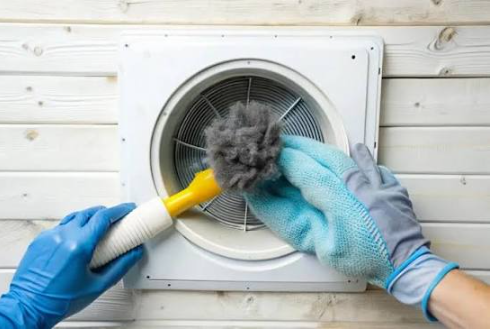
When a clothes dryer takes longer than usual to finish a load, the appliance itself may not be the problem. Lint, dust, and other obstructions inside the exhaust vent can restrict airflow, making it harder for moist air to escape. As a result, clothes may remain damp after a complete cycle, and households may run their dryers for longer than necessary.
Understanding the connection between vent blockages, drying performance, and electricity consumption helps homeowners make informed maintenance decisions. Professional dryer vent cleaning can address accumulated lint and airflow restrictions when these problems are present, helping restore the vent’s intended function.
How Dirty Dryer Vents Increase Drying Time
A clothes dryer removes moisture from wet fabrics by circulating heated air and exhausting moisture-laden air outside the home. For this process to work properly, the exhaust pathway must remain sufficiently clear.
Over time, small fibers escape the dryer’s lint screen and collect inside the exhaust duct. Lint can also accumulate around bends, joints, and the exterior vent opening. If the duct becomes restricted, moist air cannot escape as effectively.
This creates several performance problems:
- Longer drying cycles: Clothes may require additional time or another cycle to dry completely.
- Uneven drying: Thick fabrics, towels, and heavier garments may remain damp while lighter items feel dry.
- Excess heat: Restricted exhaust airflow can contribute to overheating inside the dryer.
- Reduced airflow outside: A weak stream of exhaust air may indicate an obstruction in the vent system.
The US Consumer Product Safety Commission identifies longer-than-normal drying times as a possible sign of a blocked lint screen or exhaust duct. However, heating element faults, overloaded drums, and other appliance problems can produce similar symptoms.
See also: 5 Tips for Extending Battery Life
The Connection Between Dryer Vent Blockages and Energy Consumption
A dryer that runs longer to dry the same load can consume more energy, particularly when the appliance uses electric resistance heating. If a household repeatedly runs additional cycles because clothes remain damp, its electricity consumption may increase.
For example, consider an illustrative electric dryer that uses 3 kilowatts while operating under a particular load.
| Drying scenario | Operating time | Illustrative electricity use |
| One cycle | 45 minutes | 2.25 kWh |
| Extended cycle | 60 minutes | 3.00 kWh |
| Two 45-minute cycles | 90 minutes | 4.50 kWh |
Calculation: electricity use in kilowatt-hours equals average power in kilowatts multiplied by operating time in hours.
In this example, extending a cycle from 45 to 60 minutes increases electricity use by approximately 33%, assuming the dryer draws a constant 3 kW throughout both periods. Actual consumption varies by appliance, heating cycles, load size, and operating conditions.
These figures illustrate how additional operating time affects energy use. They are not measured savings estimates for vent cleaning, and a blocked vent does not necessarily cause the same increase in every household.
Why Regular Dryer Vent Maintenance Matters for Household Safety
Energy consumption is only one reason to keep exhaust ducts clear. Lint is combustible, and restricted airflow can contribute to excessive heat buildup.
According to the Massachusetts Department of Fire Services, homeowners should clean the dryer’s lint filter after every load and clean exterior vents twice a year. The department also recommends keeping the surrounding area free of clutter and maintaining appropriate fire safety precautions.
Other warning signs deserve attention, including a burning smell, unusually hot clothing, a dryer that shuts down unexpectedly, or little airflow from the exterior exhaust opening.
If you notice a burning smell or signs of overheating, stop using the dryer until the problem has been assessed. Do not continue running repeated cycles in an attempt to overcome a suspected blockage.
Professional dryer vent cleaning can remove accumulated lint from sections that ordinary lint-screen maintenance cannot reach. It can also help identify crushed ducting, obstructed exterior covers, and other conditions that interfere with exhaust airflow.
How Often Should Dryer Vents Be Cleaned?
There is no single schedule that suits every household. Cleaning frequency depends on dryer usage, duct length, the number of bends, vent configuration, and how quickly lint accumulates.
Homes with frequent laundry loads, long exhaust runs, or previous airflow problems may require more frequent attention. A noticeable decline in drying performance is a reason to inspect the entire exhaust pathway rather than relying exclusively on a calendar schedule.
| Maintenance task | Recommended approach | Purpose |
| Clean the lint screen | After every load | Removes collected lint and supports airflow |
| Check exterior vent airflow | Periodically and when drying slows | Helps identify possible obstructions |
| Inspect the exhaust duct | According to usage, condition, and manufacturer guidance | Identifies lint buildup, damage, and restrictions |
| Clean the vent system | When inspection or performance indicates a need | Removes accumulated lint and debris |
| Check duct material and routing | During installation, repairs, or inspection | Helps identify crushed, unsuitable, or poorly configured ductwork |
For longer or concealed vent systems, professional assessment can help determine whether the full exhaust route is clear. The duct should discharge outdoors, and its materials and configuration should follow applicable requirements and the dryer manufacturer’s instructions.
What to Expect From Professional Dryer Vent Cleaning
A thorough service should involve more than removing lint near the appliance. The technician should assess accessible portions of the exhaust pathway, identify likely restrictions, remove accumulated debris using suitable equipment, and check the exterior termination.
After cleaning, the technician should verify that the duct is reconnected properly and that exhaust airflow is functioning as intended.
It is important to understand that cleaning does not repair every dryer problem. A faulty thermostat, damaged heating element, moisture sensor issue, or incorrectly installed exhaust system may require separate attention.
Homeowners can support the results by cleaning the lint screen after every load, avoiding overloaded drums, and following the manufacturer’s maintenance instructions.
Improve Dryer Performance With Affordable Air Duct & Dryer Vent Cleaning
Long drying cycles can waste time and increase household energy consumption, particularly when lint buildup restricts exhaust airflow. Addressing the underlying cause is more useful than repeatedly extending drying cycles or assuming the appliance needs replacement.
Affordable Air Duct & Dryer Vent Cleaning provides a starting point for homeowners looking into dryer vent maintenance and cleaning services. If your dryer takes longer than usual, leaves clothes damp, or shows signs of restricted exhaust airflow, visit the company’s website to learn about its available services and request further information.
Visit our website to explore your options.
Regular maintenance, timely inspections, and appropriate cleaning can help keep your dryer exhaust pathway clear while supporting safer and more consistent laundry performance.