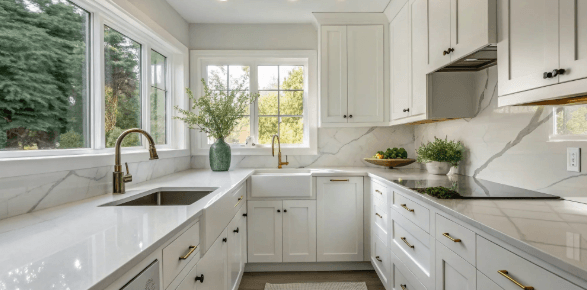
You want kitchen cabinets that look custom and work flawlessly for your life. Designer cabinets blend premium materials, precise construction, and smart storage so your kitchen feels purposeful and polished.
Choose Designer Kitchen Cabinets when you want lasting beauty, tailored storage, and finishes that elevate everyday tasks. This post walks through the features that define luxury cabinet design and the popular styles and trends that help you match form to function, so you can make confident choices for your remodel or new kitchen.
Key Features of Luxury Cabinet Design
Expect durable, tactile materials, precision hardware, and storage that adapts to how you cook and entertain. These elements combine to improve function, visual impact, and long-term value.
Premium Materials and Finishes
Choose hardwoods like quarter-sawn oak, walnut, or maple for cabinet frames and face frames; they resist warping and show consistent grain. For cabinet doors, consider solid wood or engineered veneered panels with a 6–8mm real-wood veneer to deliver the look of full wood while improving stability.
Finishes matter: catalyzed lacquer, conversion varnish, or sprayed multi-stage finishes provide depth and wear resistance. For wet zones, specify water-resistant finishes and full-overlay, painted MDF doors to limit movement. Stone or metal end panels and integrated panels for appliances create continuous visual lines.
Hardware mounting and edge details affect durability. Pre-sealed interiors and soft-close drawers with full-extension undermount glides extend lifespan and feel. Ask for finish samples and cross-section specs before committing.
Custom Hardware Options
Select solid brass or stainless-steel pulls and knobs with PVD coatings for scratch resistance and consistent patina. Custom backplates, inset ring pulls, and recessed handles let you define how doors open and read visually.
Functional hardware includes soft-close hinges with 3D adjustment, full-extension drawer slides rated for 100–150 lb, and tilt-out trays with damping. Consider coordinated finishes across hinges, pulls, and appliance trims to avoid mismatched tones.
Add specialty fittings: push-to-open for minimalist faces, integrated child locks, and pull-out peg systems for plates. Request spec sheets that list material grade, load rating, and finish warranty to ensure performance matches the aesthetic.
Innovative Storage Solutions
Prioritize layouts that place frequently used items within 24–30 inches of the work surface. Use full-extension drawers with vertical dividers for pans, split-level spice drawers for visibility, and internal drawer inserts sized to your cookware.
In-cabinet appliances like microwave drawers, refrigerated drawers, and under-sink pull-outs maintain clean sightlines. Incorporate blind-corner pull-out mechanisms or carousels to reclaim otherwise wasted space.
Plan storage by task: a dedicated baking drawer with mixing-bowl storage, utensil trays with configurable compartments, and a tray divider for sheet pans. Integrate charging stations and outlet strips inside a drawer to keep countertops clear while keeping devices accessible.
Popular Styles and Modern Trends
You’ll find a mix of clean-lined modernism, warm traditional details, and bold surface choices shaping designer kitchen cabinets today. Practical storage, refined hardware, and durable finishes drive most decisions.
Contemporary and Minimalist Influences
Contemporary designer cabinets emphasize flat-front or slab doors, integrated handles, and concealed hinges to create uninterrupted sightlines. You’ll often see full-height pantry units and push-to-open mechanisms that remove hardware clutter.
Materials favor high-pressure laminates, matte lacquer, and thermofoil for smooth, easy-care surfaces. Color leans toward cool neutrals—soft grays, greiges, and true whites—often paired with stainless or black metal accents. Open shelving and glass-front uppers appear selectively to break expanses of cabinetry while keeping the look light.
Function matters: deep drawers replace base cabinets for streamlined access, and built-in components like appliance garages or under-counter refrigeration preserve the minimalist aesthetic without sacrificing utility.
See also: What Is NF: Clear Explanation of Neurofibromatosis and Its Types
Transitional and Traditional Styles
Transitional cabinets blend shaker or inset door profiles with minimalist proportions, so you get classic detail without heavy ornamentation. You’ll notice framed construction more often here, along with beadboard, mullioned glass doors, and occasional crown molding in scaled-down forms.
Traditional choices favor natural wood species—maple, cherry, and painted hardwoods—with visible joinery and inset panels. Hardware tends to be more decorative: cup pulls, turned knobs, and oil-rubbed finishes. Designers commonly mix painted islands with stained perimeter cabinets to balance warmth and structure.
You should prioritize durable finishes and quality construction if you want a traditional look that holds value. Soft-close hinges, fully framed carcasses, and plywood boxes are common specs in designer-grade transitional kitchens.
Color Palettes and Surface Textures
Color strategies now combine moody accents with neutral bases: navy or forest-green islands paired with off-white or light-gray perimeter cabinets create contrast without overpowering the room. Two-tone schemes help you designate zones—prep, cooking, storage—visually and functionally.
Surface texture choices range from ultra-matte, fingerprint-resistant lacquers to textured wood veneers that show grain and hand. Matte black and brushed brass hardware provide tactile contrast against smooth cabinet faces. You’ll also find engineered surfaces—quartz-look laminates and UV-cured finishes—that balance aesthetics with scratch and stain resistance.
When selecting finishes, match expected wear to finish performance: choose harder, sealed surfaces near sinks and cooktops, and consider textured veneers where you want to hide minor wear over time.