Fragrance has long been used to make homes, offices, hotels, and other indoor spaces more inviting. From traditional scented candles to reed diffusers and modern electric systems, there are many ways to introduce an aroma into an environment.
As fragrance technology develops, cold-air diffusion has become another option for people interested in modern scenting systems. These devices are designed to disperse fragrance without relying on heat, offering a different approach from conventional methods.
However, no single fragrance system is ideal for every situation. The right choice depends on the room, the fragrance formulation, the desired intensity, maintenance requirements, and individual preferences. Understanding the differences between common fragrance methods makes it easier to select a suitable solution.
Understanding Traditional Home Fragrance Methods
Traditional fragrance products remain popular because they offer different experiences, price points, and levels of convenience.
Scented candles release fragrance when their wax and fragrance materials are heated during burning. Many people appreciate their decorative appearance and the soft light they provide. However, candles involve an open flame and require appropriate supervision, placement, and handling. They may also produce combustion by-products, so their use should be considered carefully in relation to ventilation and indoor air quality.
Room sprays provide a quick way to introduce fragrance. They can be useful when someone wants a temporary aroma rather than continuous scenting. Their effect is generally short-lived, and repeated application may be necessary depending on the product and room conditions.
Reed diffusers work differently. Reeds placed in a fragrance liquid draw the liquid upward and release volatile fragrance compounds into the surrounding air. They do not require electricity or an open flame, making them a convenient option for many settings. However, their output may be less adjustable than that of some electric devices, and the liquid must be handled carefully.
Electric fragrance devices use different technologies to disperse scent. Some use airflow, while others use nebulization or other mechanisms. Their performance depends on the particular design and the formulation used.
See also: 5 Tips for Extending Battery Life
What Is a Cold-Air Diffuser?
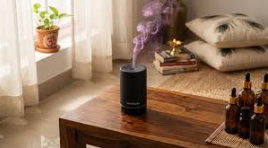
A cold-air diffuser is a fragrance diffusion device designed to disperse fragrance without using heat as the primary means of releasing the scent.
Some cold-air systems use air pressure or airflow to break a compatible fragrance liquid into small airborne droplets. The exact mechanism depends on the device, and not every product marketed as a cold-air diffuser operates in precisely the same way.
Cold-air systems are sometimes selected for their adjustable output, programmable operation, or suitability for particular commercial and residential applications. Certain models are designed for individual rooms, while others may be developed for larger spaces.
The term cold-air does not automatically mean that a device is safer, healthier, more environmentally friendly, or more effective than every alternative. Those qualities depend on the product design, ingredients, operating conditions, and how the system is used.
How Cold-Air Diffusion Works
In a typical cold-air diffusion system, a compatible fragrance formulation is dispersed into the surrounding air without being heated to release its aroma.
Depending on the technology, airflow or pressure may help disperse the fragrance into fine droplets. These droplets can carry fragrance materials into the environment, where their volatile components contribute to the perceived scent.
This process differs from reed diffusion, where fragrance travels through reeds and evaporates from their exposed surfaces. It also differs from room sprays, which release a dose of product when the user activates the container.
Some systems provide controls for adjusting output or operating schedules. Such features may allow the user to tailor operation to the space and the manufacturer’s recommendations.
It is important to use only the formulations approved for the selected device. Ordinary perfume, essential oils, and other fragrance liquids are not necessarily compatible with every diffuser. An unsuitable liquid may affect performance, damage components, or create unwanted exposure.
Cold-Air Diffusers vs. Reed Diffusers
Reed diffusers are often chosen for their simplicity. They generally require no electricity, have few mechanical parts, and can be used in a variety of decorative settings.
Their fragrance output depends on factors such as the formulation, reed material, temperature, airflow, and exposed surface area. Some products allow users to adjust the number of reeds, although this should be done according to the product instructions.
Cold-air diffusers, by contrast, may offer more control over fragrance intensity and timing, depending on the model. They can be useful when a user wants to adjust operation according to a schedule or a room’s changing needs.
However, electric systems require power and may need periodic cleaning or servicing. They can also involve higher initial costs than simple reed products.
For a small decorative area where a subtle, relatively straightforward fragrance experience is desired, a reed diffuser may be suitable. For a user who wants adjustable operation, a compatible cold-air system may be worth evaluating.
The decision should be based on practical requirements rather than the assumption that one technology is universally superior.
Cold-Air Diffusers vs. Scented Candles
Scented candles combine fragrance with the visual effect of a flame. They are often used during special occasions, meals, or periods when people want a decorative atmosphere.
A cold-air diffuser provides a different experience because it disperses fragrance without an open flame or heat-based fragrance release. Depending on its features, it may also allow scheduled operation.
Neither option should be selected solely on fragrance intensity. Candles require fire-safety precautions, appropriate holders, and supervision. Electric diffusers require proper placement, suitable power arrangements where applicable, and compliance with their operating instructions.
Both types of fragranced products can affect indoor air quality. Cold-air diffusion does not eliminate fragrance-related exposure simply because the system does not use heat. Product ingredients and usage conditions remain important.
For users who want to avoid an open flame, a suitable electric diffuser may be an alternative. Those who enjoy candlelight may prefer candles used in accordance with their safety instructions.
Choosing a Diffuser for Different Room Sizes
Room size is an important factor when selecting any fragrance system. A product intended for a large commercial environment may produce an unsuitable level of fragrance in a small bedroom or office.
Start by measuring or estimating the room’s dimensions. Then review the manufacturer’s recommended coverage and operating requirements. Remember that coverage figures may not account for every difference in building layout, airflow, ceiling height, or ventilation.
Small rooms generally require a more conservative approach to fragrance intensity. Larger spaces may require a system designed for greater coverage, but increasing output is not always the right solution.
In open-plan environments, airflow can carry fragrance into neighboring areas. Consider where people sit, work, eat, and sleep before deciding on the placement.
When a room contains multiple connected areas, test a limited setup before expanding the system. This allows you to evaluate whether the fragrance remains comfortable throughout the intended space.
Using Cold-Air Diffusers in Homes
In residential environments, cold-air diffusers may be used in living rooms, entrances, or other suitable spaces, depending on the product’s specifications.
Before selecting a device, consider the household’s preferences. Some people enjoy a subtle signature scent, while others prefer not to use fragrance indoors.
A living room used by several family members may require a different approach from a private study. Fragrance intensity should remain comfortable for everyone who regularly uses the area.
Bedrooms deserve particular consideration because people may spend many consecutive hours in them. Do not assume that a diffuser should operate while people sleep. Check the device’s instructions and follow its approved operating schedule.
Placement is also important. Keep the unit on a stable surface, away from heat sources, direct contact with fabrics, and areas accessible to children or pets. Prevent accidental contact with fragrance liquid and follow the manufacturer’s cleaning instructions.
Commercial Applications of Cold-Air Diffusion
Cold-air diffusion systems may also be considered for selected commercial environments, including reception areas, retail spaces, and some hospitality settings.
Businesses may wish to create a consistent fragrance identity that complements their interiors. A hotel lobby, for example, may have different requirements from a small retail store or a conference room.
Before installation, businesses should consider room occupancy, ventilation, fragrance preferences, operating costs, maintenance, and the suitability of the equipment for the proposed application.
Commercial systems should not be installed in ways that compromise normal ventilation or interfere with building equipment. HVAC integration requires equipment designed for that purpose and an assessment by qualified professionals.
Businesses should also establish a process for responding to guest or employee concerns. Fragrance is a matter of individual preference, and some people may experience discomfort around scented products.
Fragrance Formulations and Compatibility
The fragrance liquid is just as important as the diffusion device. A formulation designed for one system may not be suitable for another.
Before purchasing fragrance for a cold-air diffuser, review the manufacturer’s compatibility guidance. Pay attention to recommended viscosity, composition, maintenance requirements, and any restrictions on the use of essential oils or other materials.
Do not dilute or modify a fragrance formulation unless the manufacturer explicitly permits it. Changes to the formulation can affect how the device operates and how the product is dispersed.
Store fragrance liquids according to their labels, keep containers closed when not in use, and prevent spills. Follow the relevant handling instructions, especially when the product contains concentrated fragrance ingredients.
Maintenance and Long-Term Performance
Regular maintenance helps keep a diffuser operating as intended. The exact routine depends on the device, so users should consult the manufacturer’s manual rather than follow a universal cleaning procedure.
Some systems require periodic cleaning of internal components or fragrance pathways. Others may need filters, cartridges, or other consumables replaced at specified intervals.
Use only recommended cleaning materials and avoid disassembling components that the manufacturer does not identify as user-serviceable.
If the device produces an unusual noise, leaks liquid, or stops working correctly, discontinue operation and follow the manufacturer’s troubleshooting guidance.
Keeping a record of cleaning and consumable replacement can be particularly helpful in commercial environments where multiple devices are in use.
Cold-Air Diffusion and Indoor Air Quality
A cold-air diffuser should not be assumed to improve indoor air quality simply because it does not use heat. Fragrance products can release volatile compounds into indoor environments, and some individuals are sensitive to them.
People with asthma, allergies, migraines, or fragrance sensitivities may experience discomfort when exposed to fragranced products. The response depends on the individual, the formulation, and the level of exposure.
Maintain appropriate ventilation and use fragrance conservatively. If a product causes irritation, coughing, headaches, or breathing discomfort, discontinue use and move to fresh air. Seek appropriate medical advice if symptoms are severe or persistent.
Fragrance should also never replace proper cleaning or investigation of persistent odors. Address dampness, mold, smoke, waste, and other underlying sources rather than attempting to cover them with perfume.
For some households and workplaces, a fragrance-free environment will be the most appropriate option.
How to Choose the Right Diffusion Method
Before purchasing a fragrance system, consider what matters most in your environment.
If simplicity and decorative appearance are priorities, a reed diffuser may meet your needs. If you want a temporary fragrance, a room spray may be more appropriate. If candlelight is important to the experience, a scented candle may suit occasional use with suitable precautions.
A cold-air perfume diffuser may be worth considering when adjustable operation, scheduled output, or a particular diffusion method is important. Evaluate the device’s coverage, compatibility, maintenance needs, and operating costs before making a decision.
Whenever possible, begin with a small-scale trial. Assess the fragrance at a low intensity and consider feedback from the people who use the space.
Final Thoughts
Cold-air diffusers provide one option in the growing range of home and commercial fragrance technologies. Their ability to disperse fragrance without heat and, in some models, offer adjustable operation may make them suitable for particular environments.
However, the best fragrance method depends on the room, the equipment, the formulation, and the people who will be exposed to the scent. No device eliminates the need for responsible use, suitable ventilation, and regular maintenance.
By comparing cold-air systems with traditional fragrance methods and following the manufacturer’s guidance, consumers and businesses can choose a solution that fits their practical needs. The goal is not simply to make a space smell stronger. It is to create a fragrance experience that remains appropriate, balanced, and comfortable.