Most household budgets account for the obvious appliance expenses: the purchase price, the occasional repair, and eventually the replacement. What rarely appears on that ledger is the slow, compounding cost of neglect. A washing machine that is never serviced does not simply wait patiently to break down. It wastes water, draws more power than it should, wears out faster, and occasionally causes damage that dwarfs the price of the machine itself. Looking at those costs together makes a strong financial case for a habit most people treat as optional.
Prevention Versus Repair Economics
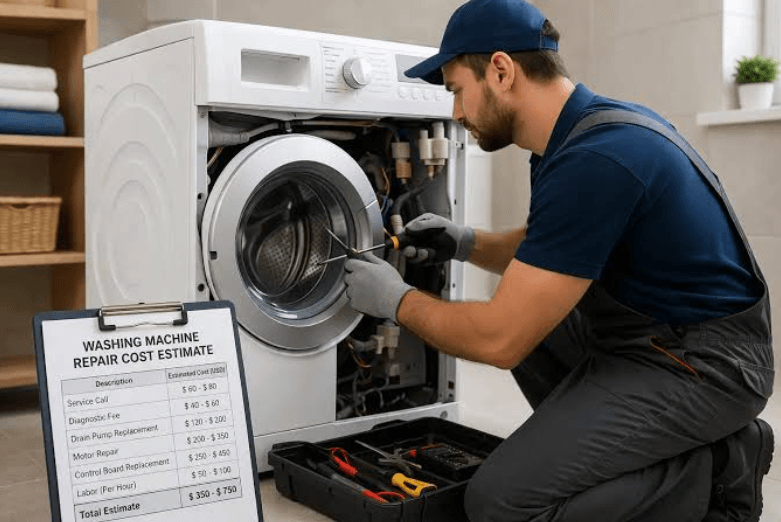
The economics here are lopsided in a way that surprises people. A thorough annual inspection is a modest, predictable expense. A major failure, by contrast, is unpredictable in both timing and size. Replacing a drum bearing, a control board, or a motor often costs a significant fraction of a new machine, and the decision to repair or replace becomes genuinely difficult. Preventive care changes the math by catching the cheap problems, a worn belt or a clogged filter, before they cascade into the expensive ones. Spending a little on a schedule is almost always cheaper than spending a lot on an emergency.
The Quiet Drain on Water and Energy
A neglected washer is rarely an efficient one. Limescale coating the heating element forces the machine to work harder to reach temperature, which shows up directly on an energy bill. A partially blocked drain or a failing pump can leave cycles running longer, using more water and electricity for the same load. Individually these losses look trivial. Across hundreds of cycles a year, they add up to a meaningful sum, and the machine responsible for them is often the same one the owner assumes is running fine.
Shortened Lifespan Is a Hidden Expense
Perhaps the largest hidden cost is the one that never shows up as a line item: a machine that dies years earlier than it should. A washer built to last a decade might struggle to reach half that if it is run hard and never maintained. Consistent regular washing machine maintenance protects that investment by keeping the components that determine longevity, the bearings, seals, and pump, in working order. Replacing an appliance every five years instead of every ten is one of the most expensive habits a household can fall into without ever noticing.
How Small Faults Snowball
One reason neglect grows expensive is that appliance faults rarely stay contained. A clogged filter makes the pump work harder, which shortens the pump’s life. A machine left slightly unlevel vibrates more, which loosens fittings and accelerates wear on the drum bearings. Detergent residue that is never cleared can foul sensors and leave the control system misreading loads. Each of these is minor on its own, but they feed one another, and a single ignored issue can quietly set off a chain that ends in a major repair. Prevention works precisely because it breaks that chain at the cheapest possible link.
The Water Damage Nobody Budgets For
Then there is the catastrophic scenario. Washing machine hoses fail more often than most people realize, and when a supply hose ruptures it can release water at full mains pressure for as long as it takes someone to notice. The resulting damage to flooring, cabinetry, and anything stored nearby can run into the thousands, and it is precisely the kind of loss that a five minute hose inspection is designed to prevent. Insurance may cover part of it, but the disruption, deductible, and premium increase are costs of their own, and none of them appear on the receipt for the machine.
See also: Enhancing Your Home with Second Storey Additions
Warranty and Resale Both Depend on It
There are quieter financial angles too. Many manufacturer warranties expect a reasonable standard of care, and a claim can be complicated by evidence of obvious neglect, such as a drum caked in residue or a filter that has clearly never been cleaned. A documented maintenance habit protects that coverage. The same logic applies at resale or when moving a machine to a new home. An appliance that has been looked after runs quieter, smells cleaner, and lasts longer for its next owner, which is worth something whether the machine is sold, handed on, or simply expected to serve for another few years.
Turning Maintenance Into a Predictable Line Item
The through line in all of this is predictability. Neglect trades small, known costs for large, unknown ones, and that trade almost never works out in the owner’s favor. Folding basic upkeep into the household routine, a monthly clean, a seasonal check, and a professional service once a year, converts a series of potential emergencies into a modest, planned expense. For an appliance that runs several times a week and handles water and electricity in equal measure, that is a bargain worth making.